


You stop checking the door five times before bed. You can sit through a meeting without your mind spiraling into worst-case scenarios. The intrusive thoughts that used to derail your entire day become background noise you can dismiss.
That’s what effective cognitive behavioral therapy in Austin, TX looks like. Not “managing” anxiety or OCD—actually reducing the grip they have on your daily life.
CBT for anxiety works because it targets the thought patterns and behaviors that keep you stuck. You learn to recognize when your brain is catastrophizing, challenge those distortions with evidence, and build new responses that don’t feed the cycle. For OCD specifically, we use exposure and response prevention—the gold standard treatment with 65-80% success rates—to help you face fears without performing compulsions.
The difference you’ll notice first is time. Hours you used to spend on rituals or worrying get returned to you. Then comes the confidence—realizing you can handle uncertainty without needing constant reassurance or control.
We bring nationally recognized expertise to Austin, TX—not just through credentials, but through lived experience. Our team includes clinicians who’ve personally conquered OCD, researchers who’ve shaped international treatment guidelines, and published experts who literally wrote the books on exposure therapy.
That combination matters when you’re dealing with intrusive thoughts you’re afraid to say out loud. We’ve heard it all, thought it all, and treated it all. Nothing you share will shock us or make us uncomfortable.
Austin’s rapid growth has created unique stressors—skyrocketing costs, disappearing community spaces, the pressure to thrive in a city that’s losing its identity. We understand how these local realities compound anxiety and OCD symptoms. Your treatment accounts for the actual life you’re living here, not some generic approach that ignores context.

First, we talk. You describe what’s happening—the thoughts, the behaviors, the impact on your life. We don’t rush this. Understanding your specific patterns is how we build a treatment plan that actually fits.
Then we start with cognitive restructuring. You’ll learn to identify the distorted thinking patterns that fuel anxiety—catastrophizing, black-and-white thinking, overgeneralizing. We examine the evidence for and against these thoughts, not to “think positive,” but to see reality more accurately.
For OCD, we move into exposure and response prevention. You’ll gradually face feared situations while resisting the urge to perform compulsions. This sounds terrifying, but you control the pace. We start small, build tolerance, and prove to your brain that the feared outcome doesn’t actually happen when you don’t ritualize.
Behavioral activation comes in when depression or avoidance has taken over. We identify activities that used to matter to you and create a structured plan to re-engage, even when motivation is low. Action creates momentum, not the other way around.
Sessions happen weekly, typically for 45-60 minutes, either in person or through secure telehealth. For severe cases, we offer intensive four-day treatment options that compress months of progress into an accelerated format.

Ready to get started?
You get a clinician who specializes in anxiety and OCD—not a generalist who treats everything from couples counseling to substance abuse. Specialization matters when you’re dealing with complex, treatment-resistant symptoms.
You get transparency about the process, the timeline, and the cost before you commit to anything. No surprises, no pressure, no forced exposures you’re not ready for. You decide the pace and direction of every session.
You get access to both virtual and in-person appointments, which matters in Austin, TX where traffic on I-35 can turn a 20-minute drive into an hour-long ordeal. Telehealth removes that barrier without compromising treatment quality.
You get evidence-based CBT therapy—specifically exposure and response prevention for OCD, cognitive restructuring for anxiety, and behavioral activation when avoidance has taken over. These aren’t experimental approaches. They’re the treatments with decades of research backing their effectiveness.
Austin has limited specialized OCD treatment options. Most therapists here practice general talk therapy, which doesn’t work for OCD and often makes it worse by providing reassurance that feeds the disorder. You’re getting access to the specific expertise that’s hard to find locally, delivered by clinicians who understand both the clinical research and the lived experience of these conditions.
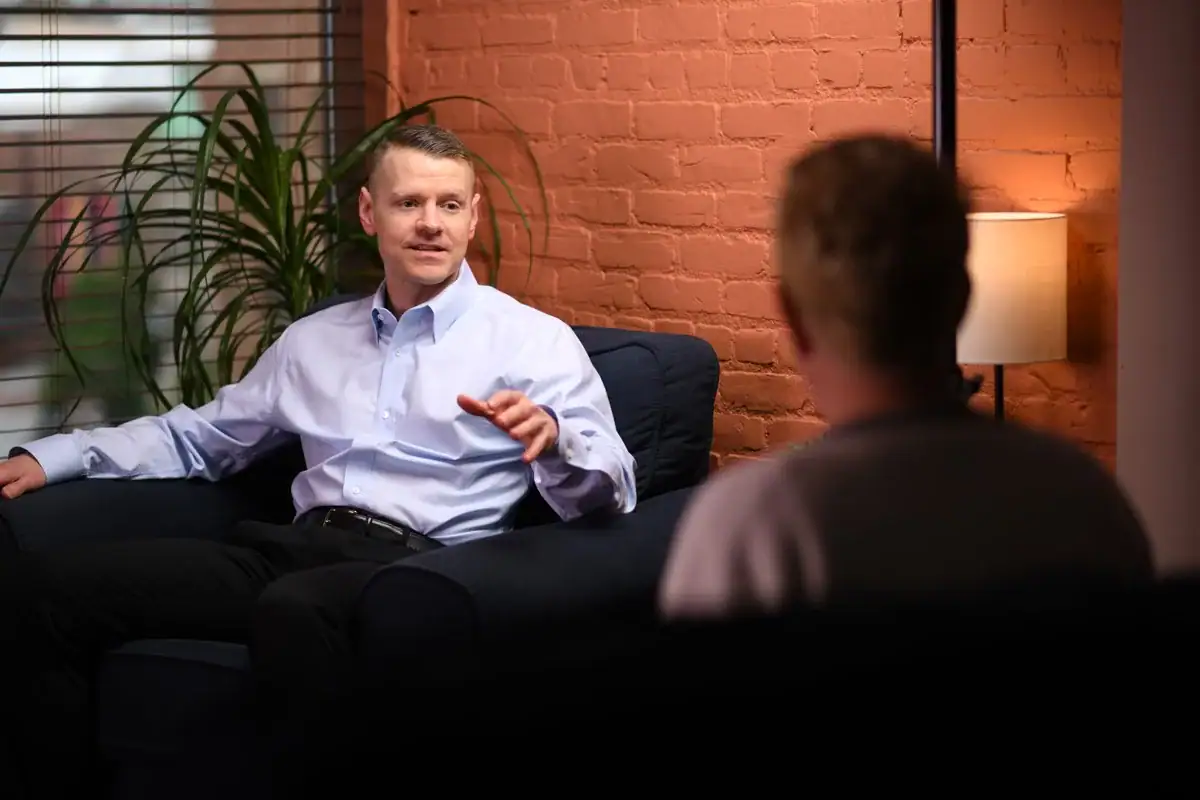
Regular talk therapy focuses on exploring feelings, processing past experiences, and building insight. That’s useful for many issues, but it doesn’t effectively treat anxiety disorders or OCD.
CBT for anxiety in Austin, TX is structured and skills-based. You’re learning specific techniques to change thought patterns and behaviors that maintain the disorder. We’re not just talking about why you feel anxious—we’re actively working to reduce the anxiety itself through exposure, cognitive restructuring, and behavioral experiments.
For OCD specifically, traditional talk therapy often makes things worse. When you discuss obsessions and get reassurance from a therapist, you’re actually performing a mental compulsion that strengthens the disorder. CBT for OCD uses exposure and response prevention, which does the opposite—it teaches your brain that you can tolerate uncertainty without seeking reassurance or performing rituals.
The structure matters too. CBT has clear goals, measurable progress, and typically lasts 12-20 sessions rather than years of open-ended therapy. You’ll know what you’re working on each week and how to tell if it’s working.
Most people who come to us have tried therapy before without success. That doesn’t mean you’re untreatable—it usually means you didn’t receive the right type of therapy for your specific condition.
Anxiety disorders and OCD require specialized treatment. If your previous therapist used general talk therapy, mindfulness techniques, or tried to help you “understand the root cause” of your obsessions, that approach doesn’t align with what actually works for these conditions. You need exposure-based treatment delivered by someone trained in these specific disorders.
Treatment resistance often comes from incomplete exposure work. Some therapists attempt ERP but allow subtle compulsions or safety behaviors that undermine progress. We’re trained to identify and address these maintaining factors that other providers miss.
The other factor is readiness. CBT for OCD requires active participation and willingness to experience discomfort during exposures. If you weren’t ready before, or if life circumstances made it impossible to engage fully, that doesn’t predict future outcomes. We’ll assess where you are now and determine if this is the right time to start.
Most people notice initial changes within 4-6 sessions of cognitive behavioral therapy in Austin, TX. That might look like slightly less time spent on compulsions, reduced avoidance of a specific situation, or increased ability to dismiss an intrusive thought.
Significant improvement typically happens around the 12-16 session mark for anxiety disorders. For OCD, you’re looking at 16-20 sessions of weekly ERP to achieve substantial symptom reduction. These aren’t arbitrary numbers—they’re based on research showing when most people reach clinically meaningful change.
That said, treatment length varies based on severity, how many different obsessions or anxiety triggers you’re addressing, and how consistently you practice between sessions. Someone with mild contamination OCD might see major improvement in 12 weeks. Someone with multiple obsession themes and severe functional impairment might need 6-9 months of weekly work.
We also offer intensive four-day treatment for people who need faster results or who’ve plateaued in weekly therapy. This format compresses months of exposure work into a concentrated period, which can be more effective for severe cases.
The key is that CBT has a defined endpoint. You’re not signing up for years of therapy—you’re learning skills you’ll use independently once treatment ends.
We’re transparent about this: insurance coverage for specialized OCD and anxiety treatment is complicated. Many insurance plans technically cover CBT, but they limit the number of sessions, require generalist providers, or don’t adequately reimburse for the intensive exposure work that OCD treatment requires.
We can provide you with superbills to submit to your insurance for out-of-network reimbursement. Whether your plan covers this depends on your specific policy’s out-of-network benefits. Many of our clients receive partial reimbursement this way, though it requires upfront payment and dealing with claims yourself.
The reason specialized providers often don’t take insurance directly is that insurance companies don’t differentiate between general therapy and specialized treatment. They reimburse the same rate for someone doing basic talk therapy as they do for clinicians with advanced training in evidence-based treatments for specific disorders. That model doesn’t support the level of expertise you need for effective OCD and anxiety treatment.
We discuss costs clearly before you start. You’ll know exactly what you’re paying and can make an informed decision about whether the investment makes sense for your situation. For many people, paying out of pocket for specialized treatment that actually works is more cost-effective than years of insurance-covered therapy that doesn’t address the core problem.
Yes. The intrusive thoughts that scare you most—the ones about harm, sexuality, religion, or whatever theme your OCD has latched onto—are exactly what CBT for OCD in Austin, TX is designed to treat.
Here’s what most people don’t understand: the content of intrusive thoughts doesn’t matter. Your brain isn’t telling you something meaningful about who you are or what you secretly want. OCD latches onto whatever you value most and creates thoughts that directly threaten that value. If you care deeply about being a good person, you get harm thoughts. If your faith matters, you get blasphemous thoughts.
Treatment doesn’t try to make these thoughts go away or convince you they’re not true. Instead, you learn to change your relationship with them. Through exposure and response prevention, you practice having the thought without performing mental or physical compulsions to neutralize it. Your brain gradually learns that these thoughts don’t require a response.
The thoughts that feel too disturbing to say out loud? We’ve heard them. Our clinicians have personal experience with OCD and have treated thousands of cases. Nothing you share will shock us or make us think differently about you. Creating a space where you can finally talk about these thoughts without judgment is often the first step toward reducing their power.
Exposure therapy is a specific technique within cognitive behavioral therapy. CBT is the broader treatment approach that includes multiple techniques—cognitive restructuring, behavioral activation, exposure work, and response prevention.
For anxiety disorders in Austin, TX, we use the full CBT toolkit. You might do cognitive restructuring to challenge catastrophic thinking patterns, then use exposure to gradually face feared situations, then add behavioral activation to re-engage with life activities you’ve been avoiding.
For OCD specifically, exposure and response prevention (ERP) is the primary technique we use, though it falls under the CBT umbrella. ERP involves deliberately triggering obsessions through exposure while preventing the compulsive response. This is how you teach your brain that the feared outcome doesn’t happen and that you can tolerate the anxiety without ritualizing.
Some providers call their treatment “CBT” but don’t actually do exposure work, which is why OCD doesn’t improve. Others do exposure but miss the cognitive piece—helping you understand why your brain generates these thoughts and how to interpret them differently. The most effective treatment combines both elements, which is what you get with specialized CBT for OCD and anxiety at our practice.
Other Services we provide in Austin