


You stop planning your day around what you’re afraid of. The intrusive thoughts lose their grip. You can leave your house without checking the lock six times, sit in a meeting without your mind racing through worst-case scenarios, or touch a doorknob without needing to wash your hands until they crack.
That’s what effective CBT therapy in Conroe, TX looks like. Not just feeling slightly better. Actually getting your life back.
Cognitive Behavioral Therapy with exposure and response prevention delivers measurable results—47.8% reduction in anxiety, 44.2% drop in depression symptoms, 22.7% improvement in quality of life. Those aren’t marketing numbers. They’re outcomes from people who were where you are now.
You’re not looking for someone to tell you to “think positive” or “just relax.” You need a clinician who knows the difference between generalized anxiety and OCD, who can spot the subtle compulsions you’ve been doing for so long you don’t even notice them anymore, and who has the training to guide you through exposure work that actually sticks.
CBT for OCD in Conroe, TX isn’t about talking through your childhood for months. It’s about identifying the specific thoughts and behaviors keeping you stuck, then systematically teaching your brain that the things you fear aren’t as dangerous as they feel.
We serve Conroe, TX and surrounding Montgomery County communities with specialized Cognitive Behavioral Therapy delivered by a team that includes nationally recognized researchers, published authors, and clinicians who’ve shaped international OCD treatment guidelines. Several of our therapists have lived experience with the conditions we treat, which means they understand the shame, the isolation, and the exhaustion that comes with it.
We’re not a general counseling practice that treats anxiety as a side offering. We exclusively focus on OCD and anxiety disorders across all ages—children, teens, and adults. That specialization matters when 62.3% of Texas adults with mental health disorders receive no treatment, and family physicians misdiagnose OCD 50.5% of the time.
You can meet with us virtually through secure telehealth or in person. We’re transparent about our process, our fees, and what treatment actually involves. No thought is too taboo here. No compulsion too embarrassing to discuss.

First, we assess what’s actually happening. Not just “I have anxiety,” but what specific thoughts trigger you, what behaviors you’re using to cope, and how those patterns are keeping the cycle alive. This is where cognitive restructuring in Conroe, TX starts—identifying the distorted thinking patterns your brain has learned to rely on.
Then we build your exposure hierarchy. This isn’t about throwing you into your worst fear on day one. It’s a systematic approach where you gradually face the situations you’ve been avoiding, starting with manageable challenges and building up. You learn that the anxiety spikes, yes—but then it comes back down. Your brain starts to relearn that the threat isn’t real.
During exposure and response prevention, you practice sitting with discomfort without doing the compulsion. If you normally check the stove five times, you check it once and sit with the anxiety. If you avoid social situations, you start attending them without your safety behaviors. This is where the actual rewiring happens.
Between sessions, you practice. Behavioral activation in Conroe, TX means you’re not just talking about change—you’re actively doing the work that creates it. We guide you through homework assignments that reinforce what you’re learning. Most clients start seeing shifts within the first few weeks, with significant improvement by week 12.

Ready to get started?
You get a clinician trained specifically in exposure-based therapies—the gold standard for OCD and anxiety treatment. Not someone who took a weekend workshop. Someone who knows the research, has treated hundreds of cases, and can adapt the approach to your specific presentation.
Sessions are typically 50-60 minutes, weekly at first, then spaced out as you progress. For those needing more intensive support, we offer a unique four-day intensive treatment option that accelerates the process. This is especially helpful if you’ve been stuck for years or if your symptoms are severe enough that weekly sessions aren’t cutting it.
In Montgomery County, where the population has grown rapidly and mental health resources haven’t kept pace, access to specialized OCD treatment has been limited. Most general therapists in Conroe, TX treat depression and relationship issues. They’re not equipped for the nuances of OCD, where reassurance-seeking can actually make symptoms worse, or where certain types of exposure need to be done carefully to avoid reinforcing the disorder.
You also get transparency. We tell you upfront what treatment costs, what insurance we accept, and what the research says about your specific condition. We don’t sugarcoat the work involved, but we also don’t leave you guessing about whether this will help. CBT therapy in Conroe, TX works for most people who commit to the process—and we’ll tell you honestly if we think you need a different level of care.
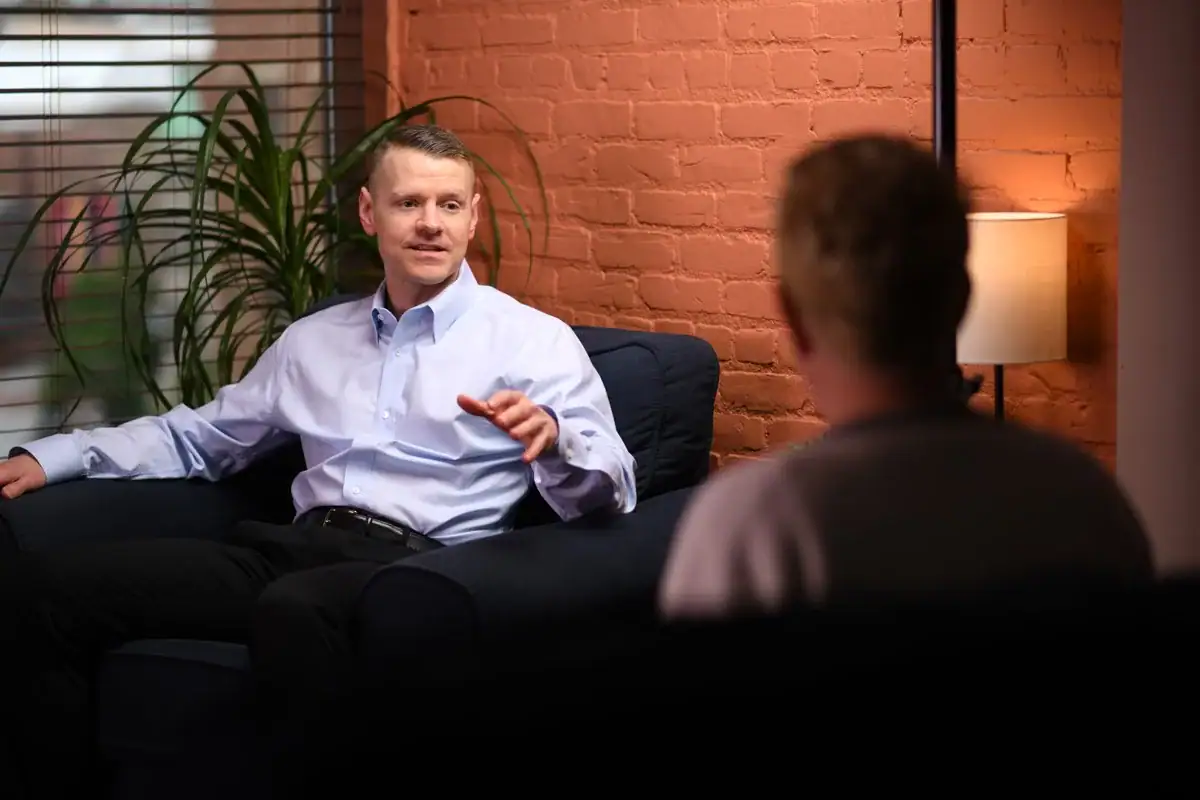
Regular talk therapy focuses on exploring feelings, processing past experiences, and building insight. That’s helpful for some issues. It doesn’t work for OCD.
OCD isn’t a problem you can think your way out of. It’s a disorder where your brain’s threat detection system is firing incorrectly, and the compulsions you do to feel better actually train your brain that the threat is real. Cognitive Behavioral Therapy for OCD in Conroe, TX uses exposure and response prevention—you deliberately trigger the obsession and then don’t do the compulsion. This teaches your brain the threat isn’t real.
The difference is active vs passive. In CBT therapy, you’re doing exercises, facing fears, and practicing new responses. In traditional therapy, you’re mostly talking. Both have their place, but for OCD and most anxiety disorders, the research is clear: exposure-based CBT is the most effective treatment we have.
No. That’s not how exposure therapy works, and any clinician suggesting otherwise doesn’t understand the treatment.
We build what’s called an exposure hierarchy—a ladder of situations ranked from least to most anxiety-provoking. You start at the bottom with challenges that spike your anxiety to maybe a 3 or 4 out of 10. As you master those, you move up. The goal is to stretch your comfort zone gradually, not traumatize you.
CBT techniques for anxiety in Conroe, TX are systematic and collaborative. You’re involved in deciding what exposures to try and when. Some people move quickly through their hierarchy. Others need more time at each level. The pace adjusts to your progress, but the direction stays the same—toward the things you’ve been avoiding.
Most people see significant improvement within 12-20 sessions. Some need fewer. Some need more. It depends on how severe your symptoms are, how long you’ve had them, and how consistently you practice between sessions.
Evidence-based anxiety treatment in Conroe, TX isn’t open-ended. We’re not meeting weekly for years. CBT is structured with clear goals and measurable progress. You should notice changes within the first month—maybe you’re doing fewer compulsions, or your anxiety spikes are less intense, or you’re avoiding fewer situations.
If you’ve had OCD for 15 years and it’s completely taken over your life, you’ll likely need more time than someone who developed symptoms six months ago. But even in severe cases, the intensive four-day treatment option can create substantial shifts quickly. The research shows that CBT works, and it works relatively fast compared to other approaches.
That’s common. Most people with OCD have tried therapy before finding a specialist. The problem usually isn’t that therapy doesn’t work—it’s that you weren’t getting the right kind of therapy.
If your previous therapist had you talking about your feelings without doing exposure work, or if they tried to help you “manage” your anxiety instead of reducing it, or if they gave you reassurance when you asked for it, that’s not CBT for OCD. It might have been labeled that way, but actual exposure and response prevention looks different.
Cognitive Behavioral Therapy in Conroe, TX delivered by clinicians trained specifically in OCD treatment follows a proven protocol. You’re doing exposures every session. You’re tracking your anxiety levels. You’re practicing response prevention. If you haven’t done that type of work before, you haven’t actually tried the treatment that has the strongest evidence base. It’s worth trying with someone who specializes in it.
We treat the full range of anxiety disorders—OCD, generalized anxiety, panic disorder, social anxiety, specific phobias, and health anxiety. The same core principles of CBT apply across all of them, though the specific techniques vary.
For generalized anxiety, we focus more on cognitive restructuring and worry exposure. For panic disorder, we do interoceptive exposures where you deliberately trigger the physical sensations you fear. For social anxiety, exposures involve gradually increasing social interactions and dropping safety behaviors.
The reason we can treat all of these effectively is that they share a common mechanism: avoidance. You avoid situations, thoughts, or sensations that trigger anxiety, and that avoidance maintains the disorder. CBT for anxiety in Conroe, TX works by systematically reducing avoidance and teaching your nervous system that what you fear isn’t actually dangerous. Whether that’s a contamination fear, a social situation, or a physical sensation, the treatment approach is similar.
Both work. We offer secure telehealth and in-person appointments, and the research shows virtual CBT is just as effective as face-to-face treatment for most people.
Some exposures are actually easier to do via telehealth because you’re already in your home environment where many triggers exist. If your OCD involves contamination fears in your kitchen, we can walk through exposures right there. If you have social anxiety, we can practice video call interactions before moving to in-person ones.
That said, some people prefer in-person sessions, especially for certain types of exposure work. If you need to practice driving or going to public places, having a therapist physically present can be helpful initially. We’re flexible and can switch between formats based on what makes sense for your treatment plan. The important part isn’t where you’re sitting—it’s whether you’re doing the work that rewires your brain’s response to anxiety.
Other Services we provide in Conroe