


You’re not looking for coping skills that barely take the edge off. You want your brain to stop hijacking your day with intrusive thoughts, compulsions, or panic that makes normal life feel impossible.
Cognitive behavioral therapy in Dallas, TX works because it targets the actual patterns keeping you stuck—the thoughts that spiral, the behaviors that reinforce fear, the avoidance that shrinks your world. When CBT is done right, you’re not just managing symptoms. You’re rewiring how your brain responds to anxiety and OCD triggers.
Most people notice they can sit with discomfort without needing to escape it. They stop checking, counting, or replaying conversations in their head for hours. They go places they’ve been avoiding. Research shows CBT techniques for anxiety reduce symptoms by nearly 48% for OCD patients and over 44% for depression that often comes with it. That’s not incremental improvement—that’s getting your life back.
We’re not a general therapy practice that dabbles in CBT. This is what we do—exclusively. Our clinicians have written the books other therapists learn from, shaped international treatment guidelines, and trained professionals across the country on exposure-based therapies that actually work.
Several of our team members have lived through OCD and anxiety disorders themselves. That’s not a footnote—it changes how treatment feels when your therapist has been where you are. You’re not explaining yourself to someone reading from a manual.
We’ve been serving Dallas, TX and the surrounding areas with both virtual and in-person cognitive behavioral therapy because we know access matters. In a state where 61% of people needing mental health treatment aren’t getting it, and where the average person waits over 17 years between diagnosis and effective OCD treatment, we’re removing every barrier we can. You shouldn’t have to wait that long or drive across the state to find someone who knows what they’re doing.

First, we assess what’s actually happening—not just your diagnosis, but how anxiety or OCD is showing up in your daily life. What thoughts are you stuck on? What are you avoiding? What compulsions are eating up your time? This isn’t a 10-minute intake form. It’s a real conversation that maps out where you are and where you need to go.
Then we start cognitive restructuring—identifying the specific thought patterns that fuel your anxiety. You’ll learn to spot when your brain is catastrophizing, overestimating danger, or treating thoughts like facts. We’re not telling you to “think positive.” We’re teaching you to evaluate whether what your brain is screaming at you is actually true.
The behavioral piece is where most of the work happens. For anxiety, that often means behavioral activation—doing the things you’ve been avoiding because avoidance is what keeps fear alive. For OCD, it’s exposure and response prevention (ERP), which is the gold standard treatment. You’ll face the thoughts or situations that trigger compulsions, and you’ll practice not doing the compulsion. It’s uncomfortable. It works.
We track progress throughout. You’ll see measurable changes—not just “feeling better,” but actual reduction in compulsion frequency, anxiety levels, and avoidance behaviors. Some clients do weekly sessions. Others benefit from our intensive four-day treatment format when you need faster progress. Both options use the same evidence-based CBT for OCD that we’ve relied on for years.

Ready to get started?
You’re getting a comprehensive assessment that doesn’t rush through your history or miss comorbid conditions—and 90% of people with OCD have at least one other diagnosis that needs attention. You’re getting a treatment plan built specifically for your symptoms, not a one-size-fits-all protocol.
You’re getting exposure-based therapy from clinicians who’ve done thousands of hours of this work. That matters when you’re facing your biggest fears. You need someone who knows the difference between pushing too hard and not pushing enough, who can adjust in real time, and who won’t let you off the hook when avoidance feels easier.
In Dallas, TX, where nearly 37% of adults report anxiety or depression symptoms—higher than the national average—you’re also getting treatment that understands the local context. We know the pressures of living in a fast-growing metro area, the cultural factors that affect how people seek help, and the gaps in the mental health system that leave people undertreated for years.
You’re getting flexible access through secure telehealth or in-person appointments. You’re getting full transparency about what treatment costs, how long it typically takes, and what outcomes you can expect. You’re getting a team that includes published researchers, clinical leaders, and people who’ve sat in your chair before. And you’re getting a practice that won’t judge you for the thoughts in your head—no matter how disturbing, taboo, or confusing they feel.
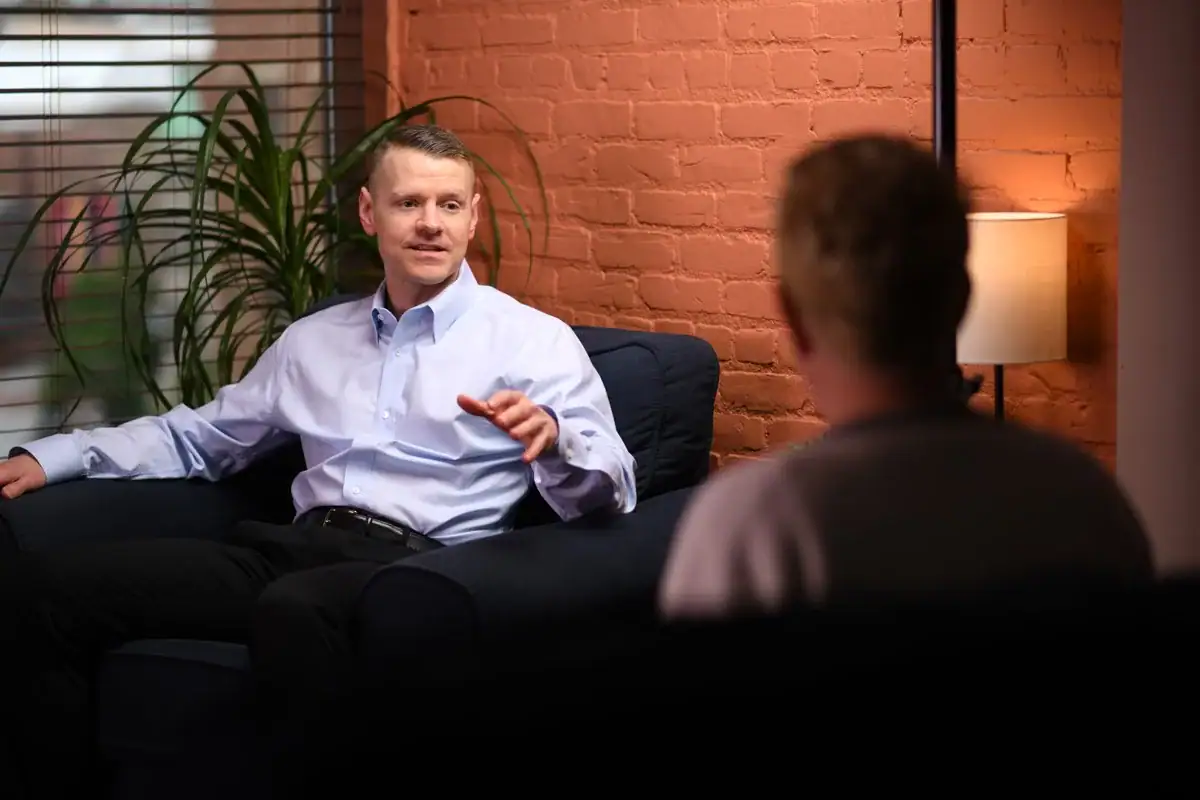
Talk therapy often focuses on exploring feelings, processing past experiences, or building insight into why you feel the way you do. That can be valuable for some issues. But for anxiety and OCD, insight doesn’t usually fix the problem. You can understand exactly why you’re anxious and still be completely controlled by it.
Cognitive behavioral therapy in Dallas, TX is structured and directive. We’re targeting specific thought patterns and behaviors that maintain your anxiety. You’re learning skills in every session—how to challenge catastrophic thinking, how to tolerate discomfort without escaping it, how to stop compulsions even when your brain is screaming at you to do them.
The other big difference is homework. Real CBT involves practice between sessions. You’re not just talking about your anxiety—you’re actively confronting it in controlled ways, tracking your progress, and building evidence that you can handle what you’ve been avoiding. Research consistently shows CBT techniques for anxiety outperform general talk therapy, with about 70% of people reporting significant improvement. That’s because we’re changing the patterns, not just discussing them.
That’s incredibly common, and it doesn’t mean you’re untreatable. It usually means you didn’t get the right type of therapy. Over half of OCD cases are misdiagnosed by family physicians, and many therapists—even well-meaning ones—aren’t trained in exposure-based treatments that actually work for anxiety disorders.
If your previous therapy focused mainly on relaxation techniques, positive thinking, or talking through your childhood without addressing your current symptoms directly, that wasn’t CBT. If your therapist told you to avoid things that make you anxious or supported your compulsions as “coping strategies,” that was actively counterproductive.
Evidence-based anxiety treatment is different. It’s uncomfortable by design because avoidance is what keeps you stuck. We have specific training in exposure and response prevention, cognitive restructuring, and behavioral activation—the techniques with the strongest research support. We’ve also seen hundreds of clients who “failed” other treatments and went on to make significant progress once they got the right approach. The treatment works when it’s done correctly by someone who specializes in it.
Most people do weekly sessions for 12 to 20 weeks, though that varies based on symptom severity and how much you’re able to practice between sessions. Some people need longer. Others make faster progress, especially in our intensive four-day treatment format.
Here’s what actually determines the timeline: how much you’re willing to do the exposures and behavioral experiments outside of sessions. We can guide you, but you’re doing the heavy lifting. If you’re practicing daily and pushing into discomfort, you’ll see changes faster. If you’re avoiding the homework or only doing exposures during sessions, progress slows down.
You should notice some improvement within the first month—maybe you’re doing fewer compulsions, avoiding less, or having an easier time dismissing intrusive thoughts. Significant improvement usually comes around the 8 to 12-week mark for anxiety, sometimes longer for complex OCD. But “done” doesn’t mean symptom-free forever. It means you have the skills to manage symptoms when they pop up and you’re no longer controlled by them. Most people step down to monthly check-ins after the intensive phase, then end treatment when they’re confident managing on their own.
For OCD specifically, exposure and response prevention is the gold standard. Nothing else comes close in terms of research support. About 60% to 70% of people who complete ERP see significant improvement. Medication can help, but even medication guidelines recommend combining it with ERP for best results.
For other anxiety disorders, there’s a bit more flexibility. Cognitive restructuring and behavioral activation can be effective for generalized anxiety or panic disorder without formal exposure work. But even then, you’re still confronting avoided situations—it’s just framed differently.
The reason exposure works is simple: your brain learns that the thing you’re afraid of isn’t as dangerous as it feels, and that you can tolerate discomfort without needing to escape it. Avoidance teaches your brain the opposite—that the fear is valid and you can’t handle it. Every time you avoid or do a compulsion, you’re reinforcing the problem. We use exposure because it’s the fastest, most effective way to break that cycle. Yes, it’s uncomfortable. But staying stuck is worse, and the discomfort is temporary. Most people are surprised by how quickly their anxiety drops once they start facing what they’ve been avoiding.
We offer both. You can do cognitive behavioral therapy in Dallas, TX through secure telehealth from anywhere in the state, or you can come to our office for in-person sessions. The treatment is equally effective either way—research on videoconference-based therapy shows it produces the same outcomes as face-to-face sessions.
Some people prefer in-person because it feels more personal or because they want help with exposures that are easier to do in the office. Others prefer telehealth because it eliminates drive time, makes scheduling easier, or feels less intimidating when you’re already anxious about starting treatment.
For exposure work, telehealth actually has some advantages. We can coach you through exposures in your own environment—your home, your car, your neighborhood—which is often where you’re most triggered anyway. You’re building skills in the real world, not just in a therapist’s office. We’ve worked with clients across Texas who wouldn’t have had access to specialized OCD treatment otherwise. As long as you have a private space and a stable internet connection, virtual CBT works.
If you’re dealing with intrusive thoughts, compulsive behaviors, panic attacks, constant worry, or avoidance that’s limiting your life, you’re likely a good fit. CBT for anxiety is designed for exactly these issues. It works for OCD, generalized anxiety disorder, panic disorder, social anxiety, and specific phobias.
You don’t need to be “ready” in some perfect way. You don’t need to have your life together or be able to articulate exactly what’s wrong. You just need to be willing to try something uncomfortable and practice between sessions. If you’re looking for a therapist who will only validate your feelings and never challenge you, CBT probably isn’t the right fit. This treatment requires active participation.
You’re also a good fit if you’ve been stuck for a while and you’re tired of surface-level advice that doesn’t actually change anything. If you want a structured, time-limited treatment with clear goals and measurable progress, that’s what CBT offers. And if you’ve been told your thoughts are “too disturbing” or you’ve felt judged by previous providers, you’ll find the opposite here. We’ve heard it all, and nothing you’re thinking is going to shock us or make us think less of you. We’re here to help you get unstuck, not to judge what’s in your head.
Other Services we provide in Dallas