


You’re not looking for someone to tell you to “just relax.” You’ve tried that. You need CBT therapy that actually addresses why your brain keeps looping back to the same fears, the same what-ifs, the same exhausting mental checks.
Cognitive Behavioral Therapy in Georgetown, TX gives you practical tools to interrupt those patterns. You learn how your thoughts trigger your emotions, and how your reactions keep the cycle going. Then you practice changing it—in real situations, not just in theory.
Most people notice they can handle situations that used to derail them. The intrusive thoughts don’t disappear overnight, but they lose their grip. You stop avoiding things that matter. You get your time back, your focus back, your ability to be present without constantly bracing for the next wave of anxiety.
The Anxiety and OCD Institute brings specialized CBT for anxiety and CBT for OCD to Georgetown, TX through both virtual and in-person sessions. Our clinicians include nationally recognized researchers who’ve shaped international treatment guidelines—and many have lived experience with the conditions we treat.
That combination matters. You’re working with people who understand the clinical side and the personal side. No thought is too taboo here. No compulsion too embarrassing to discuss.
Georgetown residents dealing with anxiety often face long wait times or settle for general therapy that doesn’t address OCD’s specific mechanisms. We focus exclusively on anxiety disorders and OCD, using evidence-based methods like exposure and response prevention (ERP) and cognitive restructuring. You’re not getting a generalist trying to apply CBT techniques for anxiety they learned in a weekend workshop. You’re getting specialists who do this every day.

First, we assess what’s actually happening—not just your diagnosis, but how anxiety or OCD shows up in your daily life. What triggers it? What do you do to cope? What have you already tried?
Then we build a treatment plan specific to you. If you’re dealing with contamination fears, we’re not starting with exposure exercises on day one. If intrusive thoughts are the issue, we’re addressing how you respond to them, not the content itself. Cognitive Behavioral Therapy in Georgetown, TX works because it’s personalized, not formulaic.
You’ll learn to identify the thoughts that fuel your anxiety, challenge the ones that don’t hold up to scrutiny, and sit with discomfort instead of running from it. That last part—behavioral activation and exposure work—is where real change happens. We do it at your pace, with full transparency about what we’re doing and why.
Sessions are available virtually or in person. You’re not forced into exposures you’re not ready for. You’re not pressured to move faster than makes sense. But you are expected to practice between sessions, because that’s where the progress actually happens.

Ready to get started?
You’re working with clinicians trained specifically in anxiety disorders and OCD—not general therapists who dabble in CBT. That means you get treatment rooted in exposure and response prevention (ERP), cognitive restructuring, and other evidence-based approaches with 65-80% success rates in research.
Georgetown’s growing population means more people are seeking mental health care, but access remains limited. About 26% of Texans couldn’t get the counseling they needed in recent years. We address that gap with flexible scheduling, virtual options, and an intensive four-day treatment program for those who need faster progress.
You also get complete transparency. We explain our fees upfront, walk you through what each session will involve, and give you a clear picture of what recovery looks like. No surprises. No vague “we’ll see how it goes” answers.
Family involvement is available when it helps. Many people with OCD have loved ones who’ve unintentionally become part of the compulsion cycle—offering reassurance, participating in rituals, or avoiding triggers together. We can work with your family to change those patterns, so everyone’s supporting your recovery instead of accidentally reinforcing the anxiety.
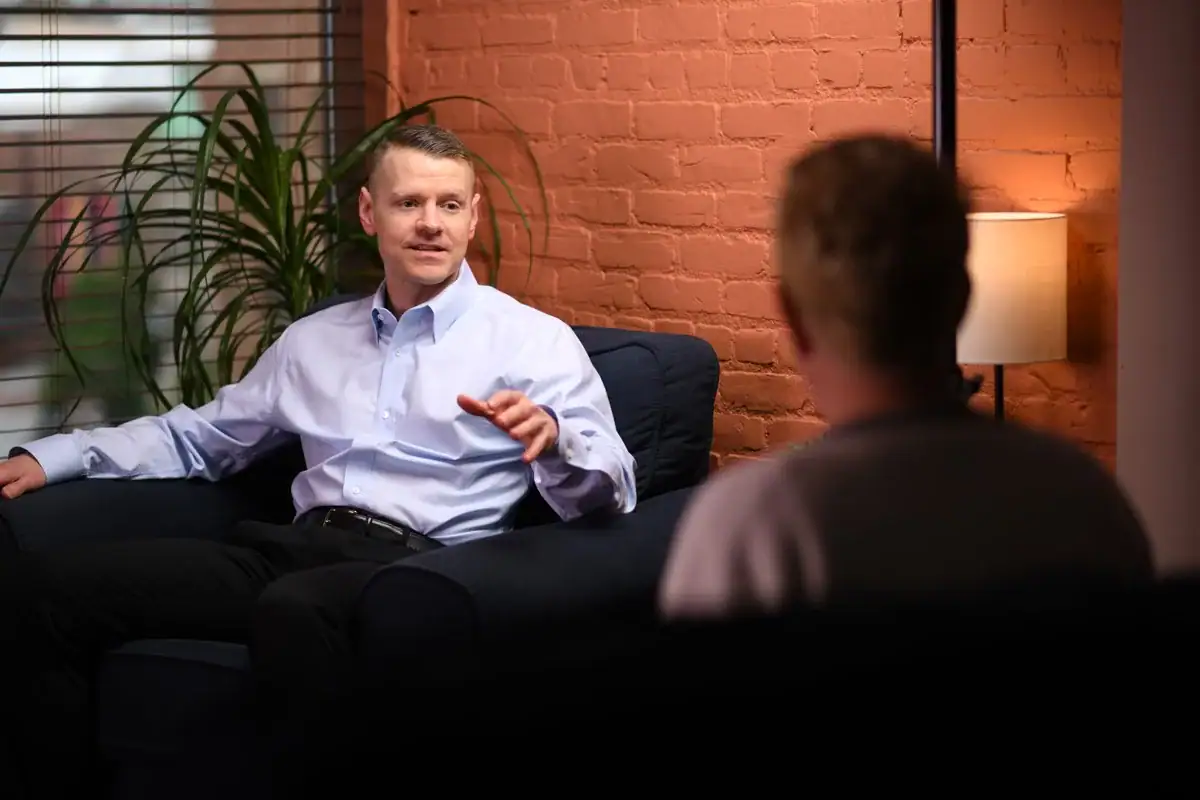
Regular talk therapy often focuses on exploring why you feel anxious or where your fears come from. That can be helpful for some issues, but it doesn’t typically change OCD. Talking about your intrusive thoughts or analyzing their origin doesn’t stop them from coming back.
CBT for OCD in Georgetown, TX focuses on how you respond to those thoughts. The goal isn’t to make the thoughts go away or to reassure you they’re not true. It’s to help you stop treating them as threats that require a response. You learn to let the thought exist without doing a compulsion, without seeking reassurance, without mentally reviewing whether it’s dangerous.
Exposure and response prevention (ERP) is the core of effective OCD treatment. You gradually face the situations or thoughts that trigger your anxiety, and you practice not doing the compulsion. It’s uncomfortable at first, but it’s also the only approach with strong research backing. Most people see significant improvement when they stick with it, often within 12-20 sessions depending on severity.
Cognitive restructuring is the process of identifying thoughts that fuel your anxiety and examining whether they’re accurate or helpful. You’re not trying to “think positive” or replace negative thoughts with affirmations. You’re learning to question the assumptions your brain makes automatically.
For example, if you think “If I don’t check the stove five times, my house will burn down,” cognitive restructuring helps you look at the evidence. How many times has your house actually caught fire? What’s the real probability? What would you tell a friend who had this same fear?
In CBT for anxiety in Georgetown, TX, we use this technique alongside behavioral experiments. You might test your prediction by only checking the stove once and seeing what actually happens. Most people find that their feared outcome doesn’t occur, and even when anxiety spikes initially, it comes down on its own. That’s how you start trusting yourself again instead of trusting the anxiety.
Most people start noticing changes within the first 4-6 sessions, but meaningful progress usually takes 12-20 sessions for anxiety and OCD. That’s not a hard rule—some people improve faster, others need more time depending on severity and how long they’ve been dealing with symptoms.
The timeline also depends on how much you practice between sessions. Cognitive Behavioral Therapy in Georgetown, TX isn’t something that happens only in the therapy room. You’re learning skills and then applying them in real life. If you’re doing the exposure exercises, challenging your thoughts when they come up, and resisting compulsions throughout the week, you’ll see faster progress.
We also offer an intensive four-day treatment option for people who need a more concentrated approach. This works well if you’re traveling from outside Georgetown, if your symptoms are severe enough that weekly sessions aren’t cutting it, or if you want to make significant progress quickly. Research shows intensive treatment can be just as effective as traditional weekly therapy, sometimes more so because you’re fully immersed in the work.
Yes, but not in the way you might be imagining. Exposure work—facing the things that trigger your anxiety—is a core part of effective CBT for OCD and anxiety. But you’re never forced into anything, and we don’t start with your biggest fear on day one.
Exposure is gradual and collaborative. We build a hierarchy together, starting with situations that cause moderate anxiety and working up from there. You’re in control of the pace. The goal is to help you learn that you can handle discomfort, that anxiety decreases on its own when you don’t fight it, and that your feared outcomes usually don’t happen.
Most people find that the temporary discomfort of exposure is far less exhausting than the constant discomfort of living with untreated OCD or anxiety. You’re already uncomfortable—you’re just managing it through avoidance, compulsions, or reassurance-seeking. Those strategies give short-term relief but make the problem worse over time. Exposure gives you long-term relief by teaching your brain that the threat isn’t real. That’s why evidence-based anxiety treatment in Georgetown, TX includes this component even though it’s challenging.
We’re transparent about costs from your first contact. Many of our clinicians accept insurance, and we’ll verify your benefits before you start so you know what your out-of-pocket costs will be. If we’re out of network for your plan, we can provide superbills for you to submit for reimbursement.
Session costs vary depending on whether you’re doing standard weekly therapy or intensive treatment. We discuss pricing during the initial consultation so there are no surprises. Some people use HSA or FSA funds to cover costs.
What matters more than the cost is whether the treatment works. Generic therapy might be cheaper, but if it doesn’t address the specific mechanisms of OCD or anxiety, you’re spending money without getting better. Specialized CBT therapy in Georgetown, TX costs more upfront but typically requires fewer total sessions because the treatment is targeted and effective. You’re not spending years in therapy making minimal progress—you’re learning skills that create lasting change, often within a few months.
Both options work well, and research shows virtual CBT is just as effective as in-person treatment for most people. We offer secure telehealth sessions for Georgetown, TX residents who prefer the convenience of meeting from home, or who have schedules that make in-person appointments difficult.
Virtual sessions also make it easier to do exposure work in your actual environment. If you’re dealing with contamination fears in your home, we can guide you through exposures in real time. If social anxiety is the issue, we can work on situations as they come up in your daily life.
Some people prefer in-person sessions, especially at the beginning of treatment. That’s fine too. You can also switch between virtual and in-person depending on what makes sense for each session. The format matters less than the quality of the treatment and your willingness to engage with the work. Behavioral activation and exposure exercises happen wherever you are—the therapy room, your home, or out in Georgetown where your triggers actually occur.
Other Services we provide in Georgetown