


You stop checking the door five times before bed. You can sit through dinner without your mind racing through worst-case scenarios. The intrusive thoughts that used to hijack your entire day become manageable—sometimes even quiet.
That’s what effective CBT therapy in Pasadena, TX looks like. Not perfection, but progress you can actually feel.
Cognitive Behavioral Therapy works because it targets the patterns keeping you stuck—the thoughts that spiral, the behaviors that reinforce fear, the avoidance that shrinks your world. When those patterns shift, everything else starts to open up. You get your time back. Your relationships improve. You sleep better.
About 70% of people who complete CBT for anxiety report real satisfaction with their outcomes. That’s not because the work is easy—it’s because the method is proven. You’re not guessing. You’re following a roadmap that’s been tested and refined over decades of research.
We serve Pasadena, TX with virtual and in-person CBT for OCD, anxiety disorders, and related conditions. Many of our clinicians have lived experience with the conditions they treat—which means they’re not just reading from a textbook.
Our team includes nationally recognized researchers, published authors, and clinicians who’ve shaped international treatment guidelines. That level of expertise matters when you’re dealing with something as specific as OCD or panic disorder. You need someone who knows the difference between general anxiety and the kind that requires exposure-based work.
In Texas, over 43% of adults reported symptoms of anxiety or depression in recent years. One in five adults experiences a mental health condition annually. But 30% of Texans who need counseling or therapy don’t receive it—often because they can’t find specialized care. That gap is exactly what we’re here to fill in Pasadena, TX and beyond.

You start with an initial conversation—usually with William—to talk through what you’re dealing with and make sure there’s a good fit. No pressure, no forced commitment. Just clarity about whether this approach makes sense for you.
Once you begin CBT therapy in Pasadena, TX, the work centers on identifying the thought patterns and behaviors that keep anxiety or OCD active. You’ll learn cognitive restructuring—a way to challenge distorted thinking without dismissing your real concerns. You’ll also practice behavioral activation, which means gradually re-engaging with the things you’ve been avoiding.
If you’re dealing with OCD, exposure and response prevention (ERP) is often part of the process. That means facing feared situations in a controlled, gradual way—without performing the compulsions that usually follow. It sounds intense, and it can be. But it’s also the most effective treatment we have, with success rates between 65% and 80%.
You decide the pace. You choose what exposures feel manageable. There’s no forcing, no shaming, no “just get over it.” The goal is steady progress, not perfection.

Ready to get started?
Every treatment plan is built around your specific symptoms, triggers, and goals. That might include weekly CBT sessions, homework assignments between appointments, and regular check-ins to track progress. For some clients, we offer intensive four-day treatment programs that compress months of work into a focused, immersive experience.
You’ll also get education about how anxiety and OCD actually function in the brain—not to overwhelm you with science, but to help you understand why certain techniques work. When you know the “why,” the “how” makes a lot more sense.
In Pasadena, TX and across Texas, access to specialized mental health care remains a challenge. Texans are over five times more likely to be forced out-of-network for mental health services than for primary care. That’s why we accept telehealth appointments and work to make treatment as accessible as possible. You shouldn’t have to drive hours or wait months to get help that actually works.
Transparency matters here. You’ll know what each session costs, what your insurance covers, and what the treatment timeline looks like. No surprises, no runaround.
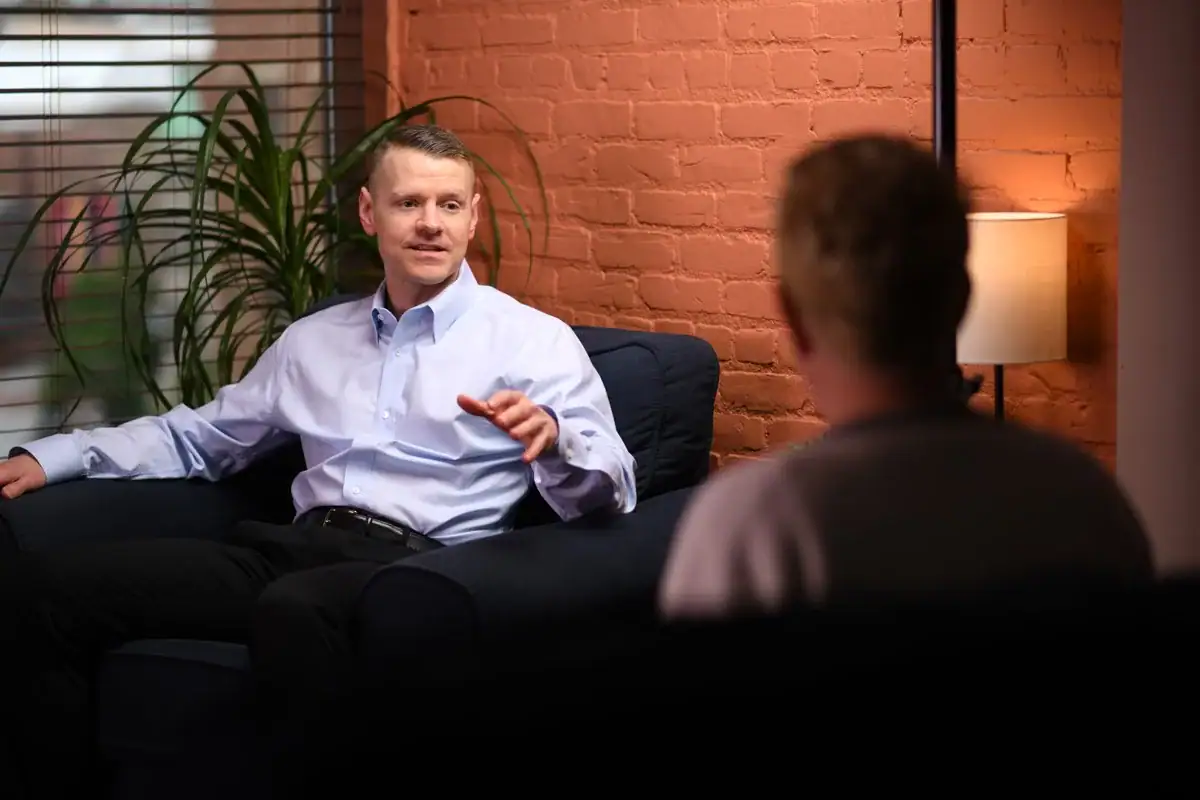
Talk therapy often focuses on understanding where your anxiety comes from—your past, your relationships, your childhood. That can be valuable, but it doesn’t always change the patterns keeping you stuck right now.
Cognitive Behavioral Therapy in Pasadena, TX is more focused on the present. You’re identifying the specific thoughts and behaviors that fuel anxiety or OCD, then actively working to change them. It’s structured, goal-oriented, and time-limited. Most people see meaningful improvement within 12 to 20 sessions.
Research backs this up. Many clients in CBT experience relief twice as fast as those in traditional talk therapy. Early gains in treatment make full recovery up to three times more likely. That doesn’t mean talk therapy is bad—it just means CBT is built for a different purpose.
That happens more often than you’d think. A lot of people spend years in therapy that isn’t specialized enough for what they’re dealing with. If you have OCD, for example, and your therapist doesn’t use exposure-based techniques, you’re probably not going to get better—no matter how kind or well-meaning they are.
CBT for OCD in Pasadena, TX is different because it’s designed specifically for anxiety disorders and OCD. The techniques are evidence-based, meaning they’ve been tested in clinical trials and proven to work. You’re not experimenting. You’re using a method with a 65-80% success rate.
It’s also worth noting that in Texas, mental illness often isn’t detected or treated until 8 to 10 years after symptoms first emerge. If your previous therapy didn’t work, it might not have been the right fit—or it might not have happened soon enough. Either way, it’s not a reflection on you.
Exposure and response prevention (ERP) can feel intimidating at first. The idea of facing your fears on purpose—without doing the compulsions or safety behaviors that usually make you feel better—doesn’t exactly sound fun.
But here’s the thing: you’re already living with the fear. Every day. ERP just gives you a way to face it on your terms, in a controlled setting, with someone who knows how to guide the process. And it’s gradual. You don’t start with your biggest fear. You build up to it.
A significant number of people refuse ERP because they think it’s going to be too frightening. But the research shows that those who stick with it see the best outcomes. About 60% of people who complete ERP achieve remission—meaning their symptoms drop to a level where they’re no longer interfering with daily life. That’s not a small number.
Most people see noticeable improvement within 12 to 20 sessions. That’s not a hard rule—some people need more time, some need less—but it gives you a realistic timeline.
CBT therapy in Pasadena, TX is designed to be time-limited. The goal is to teach you the skills you need to manage anxiety on your own, not to keep you in therapy indefinitely. You’ll learn cognitive restructuring, behavioral activation, and exposure techniques that you can use long after treatment ends.
For more severe cases, or if you’re dealing with multiple conditions at once, treatment might take longer. We also offer intensive four-day programs for people who need faster results or who’ve been stuck in traditional weekly therapy without progress. Those programs compress months of work into a focused, immersive experience.
Yes, we work with most major insurance providers and can help you understand your coverage before you start. That said, mental health coverage in Texas can be complicated. Texans are over five times more likely to be forced out-of-network for mental health care than for primary care.
We’re transparent about costs from the beginning. You’ll know what each session costs, what your insurance will cover, and what your out-of-pocket responsibility looks like. If you don’t have insurance or your plan doesn’t cover our services, we’ll talk through other options.
Access to care matters. In Texas, 26.4% of people who need mental health treatment can’t get it—often because of cost or availability. We do everything we can to make evidence-based anxiety treatment in Pasadena, TX accessible, whether that’s through telehealth, flexible scheduling, or working with your insurance.
Yes. That’s exactly what it’s designed for. Intrusive thoughts are a hallmark of OCD, and they’re one of the most distressing symptoms people deal with. The thoughts feel real, urgent, and impossible to ignore. The compulsions—whether they’re physical rituals or mental checking—are your brain’s way of trying to neutralize the fear.
CBT for OCD in Pasadena, TX teaches you how to sit with the intrusive thoughts without responding to them. That’s the “response prevention” part of ERP. Over time, your brain learns that the feared outcome doesn’t actually happen, and the thoughts lose their power.
It’s not about making the thoughts go away completely. It’s about changing your relationship with them so they don’t control your life. Remission rates for OCD after ERP are around 59% post-treatment, and those gains tend to hold at follow-up. That’s real, lasting change—not just temporary relief.
Other Services we provide in Pasadena