


You stop canceling plans because the what-ifs take over. You sleep through the night without your brain replaying every conversation from the day. You make decisions without second-guessing yourself into paralysis.
That’s what cognitive behavioral therapy in Plano, TX is designed to do—not just help you cope with anxiety, but actually reduce it. CBT therapy teaches you to identify the thought patterns that fuel your anxiety and replace them with responses that don’t send you spiraling. It’s structured. It’s measurable. And it works for about 70% of people who complete it.
You’re not learning to live with constant worry. You’re learning how to dismantle it. That means fewer physical symptoms—less chest tightness, fewer panic attacks, better focus at work. It means showing up for your life instead of watching it happen from the sidelines.
This isn’t about positive thinking or pushing through. It’s about rewiring the patterns that keep you stuck.
We serve Plano, TX with a team that includes nationally recognized researchers, published clinicians, and advocates—many with lived experience of the conditions we treat. That combination matters when you’re sitting across from someone trying to explain intrusive thoughts or compulsions that don’t make sense even to you.
Our clinicians have shaped international OCD treatment guidelines and written the books other therapists learn from. But credentials alone don’t create trust. What does is sitting with someone who gets it—who knows what it’s like when your brain won’t stop, and who has the clinical training to help you change it.
Plano sits in Collin County, where nearly 300,000 children and teens have access to just 43 child and adolescent psychiatrists. Mental health care here is stretched thin. We’re filling that gap with specialized CBT for anxiety and OCD—both virtually and in person—so you’re not waiting months to get help that actually fits what you’re dealing with.

You start with an assessment. We’re not guessing at what’s going on—we’re identifying the specific thought patterns, triggers, and behaviors that keep you stuck. That’s where cognitive restructuring begins: learning to spot the distortions your brain defaults to and testing whether they’re actually true.
Then comes the work. CBT techniques for anxiety include exposure-based exercises, behavioral activation, and response prevention. If you have OCD, that means gradually facing the situations that trigger compulsions—without doing the compulsion. If it’s generalized anxiety, it means challenging the catastrophic thinking that makes everything feel urgent and dangerous.
Sessions are typically 50 minutes, once or twice a week. For some people, that’s enough. For others—especially those with OCD—we offer intensive four-day programs that compress months of progress into a focused treatment window. You’ll have homework. You’ll track your progress. And you’ll see measurable change, usually within the first few sessions.
This is evidence-based anxiety treatment in Plano, TX. It’s not experimental. It’s not a long-term exploration of your childhood. It’s a structured approach with a clear goal: reducing symptoms so you can function without constant interference from your own mind.

Ready to get started?
You get a treatment plan built around your specific symptoms—not a one-size-fits-all protocol. That means personalized cognitive restructuring exercises, exposure hierarchies tailored to your triggers, and behavioral activation strategies that fit your daily life in Plano, TX.
You also get transparency. We’re upfront about what CBT for anxiety and OCD involves, how long it typically takes, and what the research says about success rates. For OCD, that’s 60-80% response rates with proper exposure and response prevention therapy. For anxiety disorders, about 65-80% of people see significant improvement.
Here’s what matters locally: Collin County is designated as a Mental Health Professional Shortage Area. That means access to specialized care is limited, and most therapists here are generalists. We’re not. We focus exclusively on anxiety and OCD, using the methods that have the strongest evidence behind them. You’re not getting diluted care from someone who treats everything. You’re getting depth.
We offer both virtual sessions and in-person appointments. If you’re in Plano, TX and need flexibility, telehealth works. If you need the structure of showing up somewhere, we’ve got that too. And if you’re dealing with severe OCD that’s controlling your life, our intensive program can fast-track your progress in four days instead of four months.
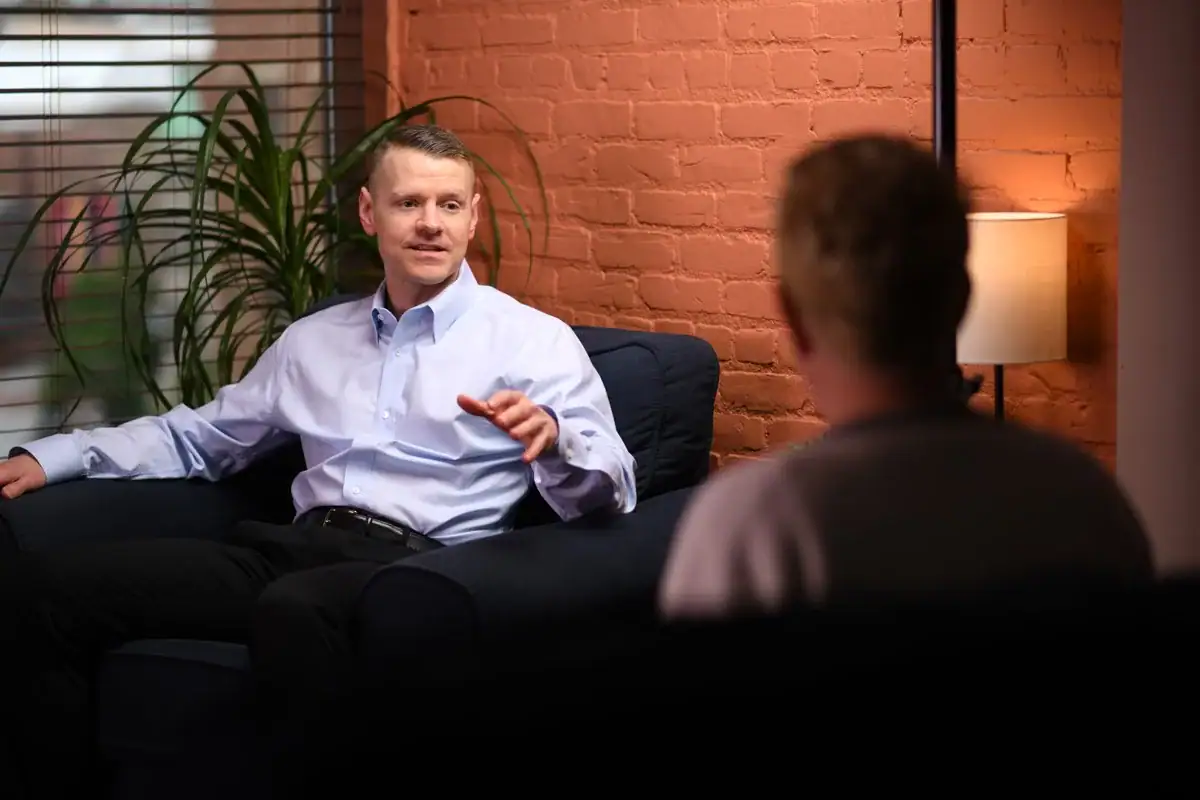
CBT therapy is structured and goal-focused. You’re not spending months talking about how you feel—you’re identifying the specific thoughts that drive your anxiety and learning to change them. Each session has a clear agenda. You’ll get homework. You’ll practice new responses to triggers. And you’ll measure progress week to week.
Regular talk therapy can be helpful for processing emotions or exploring patterns, but it’s not designed to directly reduce symptoms. Cognitive behavioral therapy in Plano, TX is. It’s built around techniques like cognitive restructuring (challenging distorted thoughts), exposure (facing fears in a controlled way), and behavioral activation (doing things even when anxiety says don’t). These aren’t abstract concepts—they’re skills you practice until they become automatic.
The timeline is different too. CBT typically runs 12-20 sessions for anxiety, sometimes longer for OCD. You’re not signing up for years of open-ended therapy. You’re working toward a specific outcome: fewer symptoms, better functioning, and tools you can use on your own once treatment ends.
It depends on what kind of therapy you tried. If it wasn’t exposure and response prevention (ERP)—the gold standard for OCD—then you haven’t actually tried the treatment most likely to work. A lot of people spend years in therapy that helps them understand their OCD but doesn’t reduce it. That’s not the same thing as CBT for OCD in Plano, TX.
ERP is a specific type of cognitive behavioral therapy that involves gradually exposing yourself to the thoughts or situations that trigger obsessions—and then not doing the compulsion. It’s uncomfortable. But it works for 60-80% of people who stick with it. The key is working with someone who specializes in OCD and knows how to structure exposures so they’re challenging but not overwhelming.
If you’ve tried ERP before and it didn’t work, that’s worth exploring. Sometimes it’s about the fit with the therapist. Sometimes the exposures weren’t targeted correctly. Sometimes life circumstances got in the way. We include clinicians who’ve written the research on OCD treatment, so we’re not guessing. We know what works and how to adjust when it doesn’t.
Most people notice some change within the first four to six sessions. That doesn’t mean you’re cured—it means you’re starting to see that the techniques actually do something. Maybe you catch a distorted thought before it spirals. Maybe you complete an exposure and realize the feared outcome didn’t happen. Those small shifts build momentum.
For generalized anxiety, treatment typically runs 12-16 sessions. For OCD, it’s usually longer—16-20 sessions or more, depending on severity. If you’re doing our intensive program, you’re compressing that timeline into four days of focused work. It’s not easier, but it’s faster.
Here’s what matters: CBT therapy in Plano, TX isn’t open-ended. You’re not wondering if it’s working or when you’ll be done. We’re tracking your symptoms from the start, measuring progress, and adjusting the approach if something isn’t landing. You’ll know whether it’s helping within the first month. And if it’s not, we’ll talk about why and what to do differently.
You start by reviewing what happened since the last session—what situations triggered anxiety, how you responded, and whether you practiced the skills you’re learning. Then you work on a specific goal for that day. Maybe it’s identifying a cognitive distortion you keep falling into. Maybe it’s planning an exposure. Maybe it’s learning a new behavioral activation technique.
Your therapist will teach you the skill, walk you through how to use it, and then you’ll practice—sometimes in session, sometimes as homework. For example, if you’re working on cognitive restructuring, you might identify a thought like “If I don’t check my email right now, something terrible will happen,” and then test that thought against evidence. Does it hold up? What’s a more accurate way to think about it?
Sessions are 50 minutes. They’re structured but not rigid. If something urgent came up during the week, you talk about it. But the focus stays on building skills, not just venting. By the end, you’ll know exactly what you’re working on before the next session. Evidence-based anxiety treatment in Plano, TX isn’t mysterious. It’s practical, and you’ll see how each piece connects to reducing your symptoms.
Both work. Research shows that virtual CBT for anxiety and OCD is just as effective as in-person treatment—sometimes more so, because you can do exposures in your actual environment instead of a therapist’s office. If your OCD involves contamination fears in your kitchen, we can work on that in your kitchen via telehealth. That’s harder to replicate in person.
Virtual sessions also remove barriers. You’re not driving across Plano, TX in traffic or rearranging your schedule around office hours. You log in, do the work, and get back to your day. For people with severe anxiety or agoraphobia, that accessibility matters. You’re not avoiding treatment because leaving the house feels impossible.
That said, some people prefer in-person. There’s something about showing up to a physical space that creates structure and accountability. We offer both, so you can choose what fits your life. And if you start with one format and want to switch, that’s fine. The treatment itself doesn’t change—just the delivery method.
Yes—but only because avoiding them is what keeps them powerful. One of the biggest barriers to getting help for OCD or intrusive thoughts is shame. People worry their thoughts are too disturbing, too weird, or too unacceptable to say out loud. But here’s the thing: your therapist has heard it before. Intrusive thoughts about harm, sex, religion, contamination—they’re common, and they don’t mean anything about who you are.
CBT for OCD in Plano, TX requires exposing those thoughts so you can stop reacting to them like they’re dangerous. That means talking about them, writing them down, sometimes even sitting with them intentionally until your brain stops treating them like emergencies. It’s uncomfortable at first. But it’s also the only way to break the cycle.
We create a space where no thought is too taboo. You’re not being judged. You’re being helped. And the clinicians on our team—many of whom have lived experience with OCD—understand what it’s like to have a brain that generates thoughts you’d never choose. You’re not explaining yourself to someone who’s guessing. You’re working with someone who knows exactly what you’re dealing with and how to help you move through it.
Other Services we provide in Plano