


You’re not looking for someone to tell you to “just relax” or “think positive.” You’ve tried that. What you need is a treatment approach that addresses why your brain keeps getting stuck in loops of worry, intrusive thoughts, or compulsive behaviors—and how to actually break those patterns.
Cognitive Behavioral Therapy in The Woodlands, TX gives you practical tools to identify the thought patterns fueling your anxiety or OCD. You learn to challenge distorted thinking, face fears in a controlled way, and build new behavioral responses that don’t involve avoidance or compulsions. This isn’t about coping forever—it’s about reducing symptoms to the point where they’re no longer controlling your decisions, your relationships, or your daily routine.
The research is clear: 65-80% of people who complete CBT for anxiety or OCD see significant improvement. That’s not a guarantee, but it’s a hell of a lot better than white-knuckling your way through another year hoping things get better on their own. You get structured sessions, homework that actually makes sense, and a clinician who knows the difference between general anxiety and the specific hell of obsessive-compulsive patterns.
We serve clients throughout The Woodlands, TX with both virtual and in-person sessions. Our team includes nationally recognized researchers who’ve written the books other therapists learn from, and clinicians with lived experience who know what it’s like to have intrusive thoughts that won’t stop or compulsions that hijack your day.
We’re not a general counseling practice that treats a little bit of everything. We specialize in OCD and anxiety disorders—that’s it. You’re working with people who understand the nuances between panic disorder and health anxiety, between contamination OCD and harm obsessions. That specificity matters when you’ve already tried therapy that didn’t work because the clinician didn’t really get it.
The Woodlands community includes highly educated professionals and families who expect transparency, expertise, and results. We don’t do vague treatment plans or open-ended “let’s see how it goes” approaches. You’ll know what we’re doing, why we’re doing it, and what the research says about whether it works.

First session is assessment. We’re figuring out what’s actually going on—not just “I have anxiety,” but what type, what triggers it, how it’s showing up in your life. You’ll talk through your history, current symptoms, and what you’ve already tried. This isn’t therapy yet—it’s diagnostic work so we can build a treatment plan that makes sense for your specific situation.
Once we’re clear on the diagnosis, we start with cognitive restructuring. That means identifying the thoughts driving your anxiety or compulsions, examining whether they’re accurate, and learning to challenge them in real time. If you’re stuck in “what if” loops or catastrophic thinking, this is where we interrupt those patterns. You’ll get homework—thought records, behavioral experiments—because CBT for OCD and anxiety requires practice outside the session.
Then comes exposure work, which is where most people see the biggest gains. For OCD, that’s Exposure and Response Prevention (ERP)—facing feared situations without doing the compulsion. For anxiety, it’s gradually confronting avoided situations until your nervous system learns they’re not actually dangerous. This isn’t about forcing you into anything. You control the pace. But you do have to be willing to feel uncomfortable, because avoidance is what keeps the problem alive.
Behavioral activation is part of the mix too, especially if anxiety has led to withdrawal or depression. We’re rebuilding routines, re-engaging with activities that matter to you, and breaking the cycle of avoidance that makes everything worse over time.

Ready to get started?
Standard treatment is weekly 50-minute sessions, either virtual or in-person. You’ll have a structured agenda each time—not just venting about your week, but working through specific techniques and reviewing homework. Between sessions, you’re practicing what we covered. That’s non-negotiable if you want results. CBT isn’t passive—it’s skills training.
For people who need faster progress or who’ve been stuck in severe OCD for years, we offer intensive four-day treatment. That’s multiple hours per day of exposure work, cognitive restructuring, and skill-building. It’s not easy, but it compresses months of weekly therapy into a focused intervention. Some people respond better to that format, especially if weekly sessions haven’t been enough.
In The Woodlands, TX, about 43% of adults report symptoms of anxiety or depression—and many have tried therapy before without seeing real change. That’s often because they were getting supportive counseling instead of evidence-based treatment. There’s a difference. Supportive therapy helps you feel heard. CBT for anxiety and OCD helps you function differently. Both have value, but if you’re reading this, you probably need the latter.
You’ll also get full transparency on fees, treatment length, and what success looks like. Most people see meaningful improvement within 12-20 sessions for anxiety, though OCD can take longer depending on severity. We’re not interested in keeping you in therapy forever—we’re interested in teaching you skills so you don’t need us anymore.
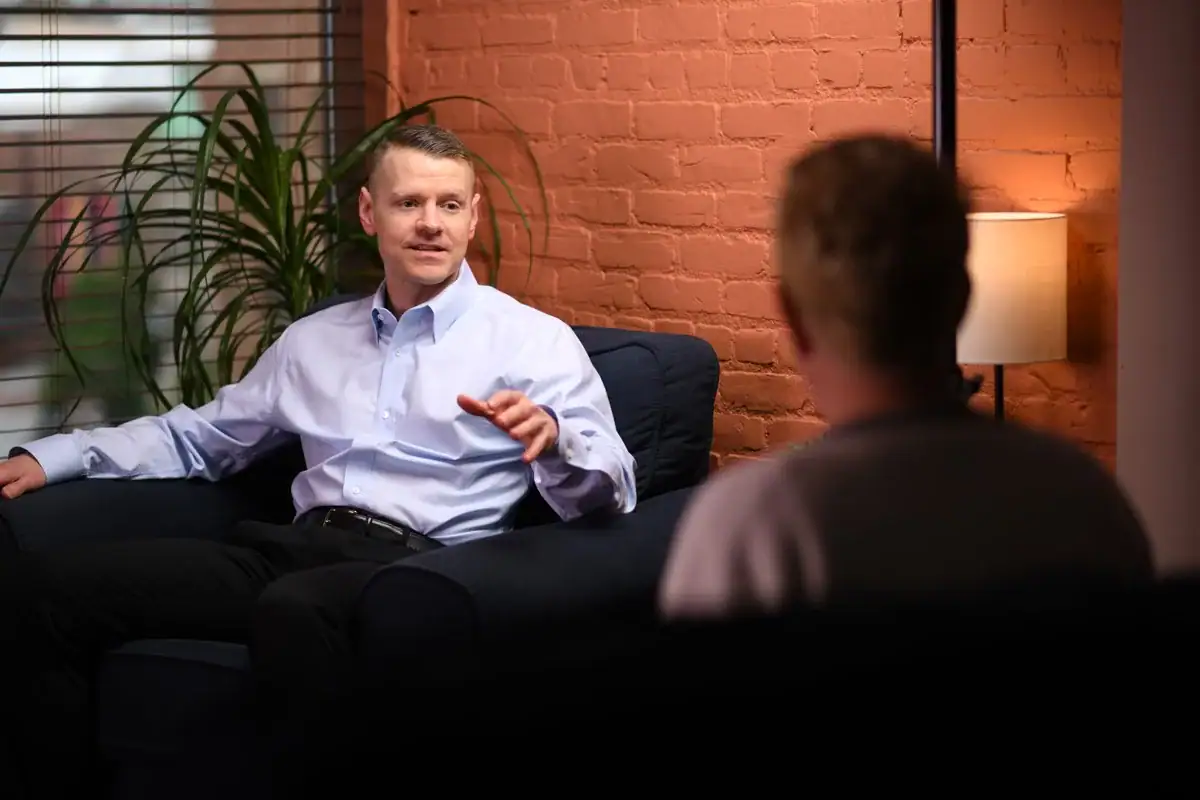
Talk therapy often focuses on understanding why you have anxiety or exploring past experiences. That can be helpful for some things, but it doesn’t directly change the compulsive behaviors or thought patterns driving OCD. Cognitive Behavioral Therapy in The Woodlands, TX—specifically Exposure and Response Prevention—works by retraining your brain’s threat response.
Here’s the difference: in traditional therapy, you might talk about why you’re afraid of contamination. In ERP, you’d actually touch something you consider contaminated and then resist washing your hands. That sounds brutal, but it’s how your brain learns the fear is disproportionate. Talking about the fear doesn’t teach your nervous system it’s safe—exposure does.
The research backs this up. About 70% of people who complete ERP see significant symptom reduction. That’s not because they’ve gained insight into their childhood—it’s because they’ve systematically faced their fears and learned new behavioral responses. If you’ve done years of talk therapy without improvement in your OCD, this is probably why.
That happens more often than you’d think, and it’s usually for one of three reasons. First, the therapist wasn’t actually trained in evidence-based CBT for anxiety or OCD—they were doing a general version that didn’t include exposure work. Second, the treatment wasn’t intensive enough or didn’t last long enough to see results. Third, the homework wasn’t done consistently, which is like trying to learn piano without practicing between lessons.
At the Anxiety and OCD Institute, you’re working with clinicians who specialize exclusively in OCD and anxiety disorders. We’re not generalists who treat a little bit of everything. Our team includes researchers who’ve published studies on CBT techniques for anxiety and OCD treatment protocols. That level of specialization matters when you’ve already tried therapy that didn’t work.
We’re also transparent about what’s required for success. If you’re not willing to do exposure work or practice skills between sessions, we’ll tell you upfront that CBT probably isn’t the right fit right now. That’s not judgment—it’s honesty. You deserve to know what’s actually going to move the needle instead of spending months in therapy that’s not designed to treat your specific problem.
For generalized anxiety or panic disorder, most people see significant improvement within 12-16 sessions if they’re doing the work between appointments. That’s roughly three to four months of weekly CBT therapy in The Woodlands, TX. Some people need less time, some need more—it depends on severity, how long you’ve been dealing with it, and whether there are complicating factors like depression or trauma.
OCD typically takes longer because the compulsions are more entrenched. You’re looking at 20-30 sessions on average, though some people need intensive treatment if they’ve been stuck for years. The four-day intensive option can accelerate progress significantly, especially for severe cases where weekly sessions aren’t cutting it.
Here’s what matters: CBT has a clear endpoint. You’re not signing up for years of open-ended therapy. We’re teaching you skills so you can manage symptoms independently. Once you’ve learned cognitive restructuring, exposure techniques, and behavioral activation strategies, you don’t need weekly sessions anymore. Some people come back for tune-ups during stressful periods, but the goal is always independence—not long-term dependence on therapy.
Both. Virtual CBT for anxiety and OCD is just as effective as in-person treatment according to research on internet-delivered CBT. You get the same structured sessions, the same homework, the same exposure work—just through a secure video platform instead of sitting in an office. For people in The Woodlands, TX who have scheduling constraints, childcare issues, or just prefer meeting from home, virtual sessions remove a lot of barriers.
In-person appointments are available if that’s your preference. Some people do better with face-to-face interaction, especially early in treatment when they’re building trust with a new clinician. Exposure work can also be easier to coordinate in person for certain types of OCD, though most exposures happen in your own environment anyway.
The flexibility matters because one of the biggest reasons people don’t get treatment is access. About 30% of Texas adults who need counseling or therapy don’t receive it, often due to logistical barriers. We’re trying to eliminate as many of those barriers as possible while still delivering evidence-based treatment that actually works.
For OCD treated with Exposure and Response Prevention, research shows 60-70% of people experience significant symptom reduction. That means measurable improvement in how much time you’re spending on compulsions, how much distress you’re feeling, and how much the OCD is interfering with your life. It’s not a cure—OCD is a chronic condition—but it’s management to the point where it’s no longer running your life.
CBT for anxiety disorders has similar success rates. Studies show about 60-65% of people respond to treatment, with response defined as at least a 50% reduction in symptoms. That’s a hell of a lot better than the 20-30% placebo response rate you see in control groups. The treatment works—not for everyone, not perfectly, but significantly better than doing nothing or trying approaches that aren’t evidence-based.
Here’s the catch: those success rates assume you’re actually doing the work. If you’re skipping homework, avoiding exposures, or not practicing cognitive restructuring between sessions, your odds drop significantly. CBT for OCD and anxiety in The Woodlands, TX isn’t passive. You’re learning skills, and skills require practice. But if you’re willing to put in the effort, the data says you’ve got a solid chance of seeing real improvement.
OCD gets misdiagnosed as generalized anxiety all the time, and that matters because the treatment approach is different. If you’re spending significant time each day on repetitive behaviors—checking, washing, counting, seeking reassurance, mental reviewing—or if you’re avoiding situations because of specific fears about harm, contamination, or things being “not right,” you’re probably dealing with OCD, not just anxiety.
The key difference is compulsions. Anxiety makes you worry about a lot of things. OCD makes you do things to try to neutralize specific fears, and those behaviors become their own problem. General CBT for anxiety focuses on worry management and gradual exposure. CBT for OCD in The Woodlands, TX focuses specifically on breaking the compulsion cycle through response prevention—which means learning to sit with the anxiety without doing the behavior that temporarily relieves it.
This is why working with a specialist matters. A generalist might treat your checking compulsions as “just anxiety” and miss the OCD component entirely. Our clinicians are trained to spot the difference and adjust treatment accordingly. If you’re not sure what you’re dealing with, the assessment process will clarify it. You’ll know exactly what you’re treating and why the approach we’re recommending is the right fit for your specific situation.
Other Services we provide in The Woodlands