
Exposure therapy isn't about forcing yourself through fear—it's about rewiring how your brain processes threat. Here's the science behind why it works.
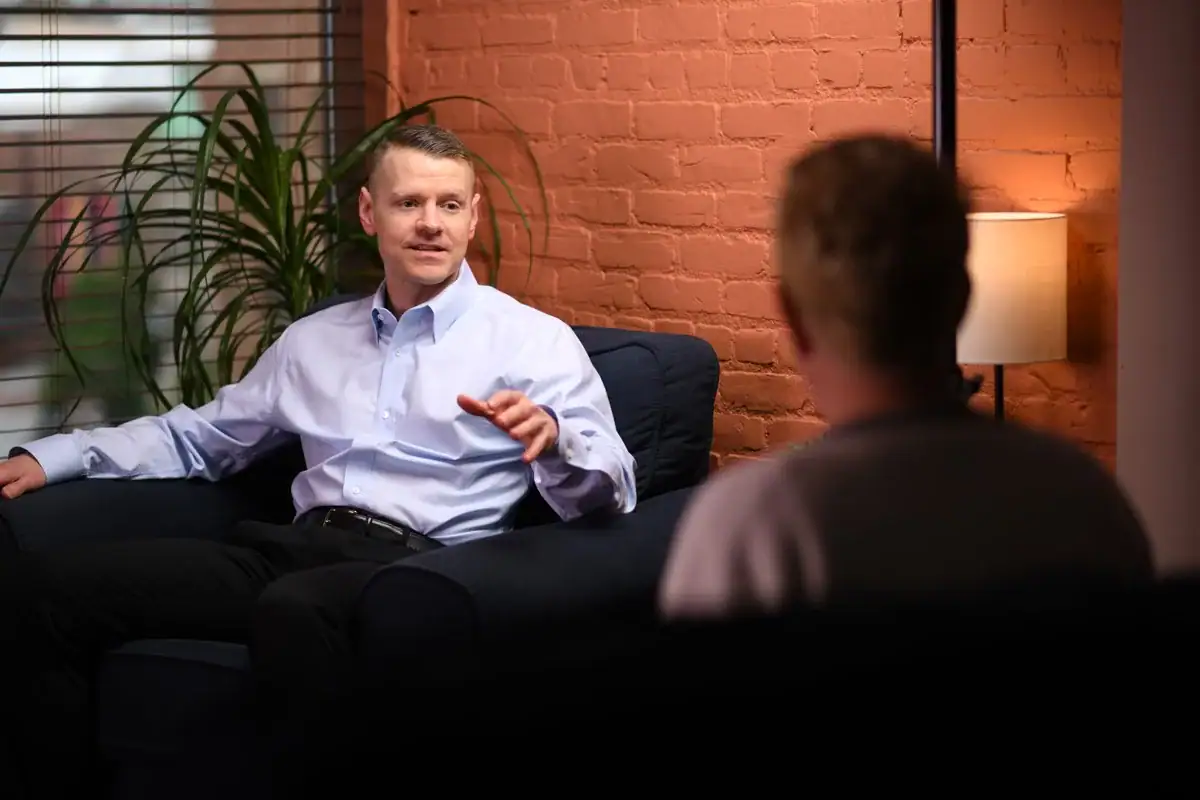
Exposure therapy works by systematically and gradually confronting the thoughts, situations, or sensations that trigger your anxiety or obsessions. But here’s what makes it different from just “facing your fears” on your own: you’re doing it with intention, structure, and the guidance of someone who knows how to help your brain learn something different.
When you avoid what scares you, your brain never gets the chance to update its threat assessment. It stays convinced that the thing you’re avoiding is dangerous. Exposure therapy breaks that cycle by giving your brain new information—repeatedly showing it that the feared outcome either doesn’t happen or that you can handle the discomfort better than you thought.
This process taps into how your brain naturally learns and unlearns associations. And it’s not just psychological. Brain imaging studies show that successful exposure therapy actually changes activity patterns in your brain, quieting the fear center and strengthening the parts responsible for rational thinking and emotional regulation.

Habituation is one of the brain’s most basic learning processes, and it plays a key role in exposure therapy. Simply put, habituation is what happens when your anxiety naturally decreases after repeated or prolonged contact with something that initially triggered fear.
Think about the last time you heard a loud noise—maybe a siren or a door slamming. Your body reacted: heart rate up, muscles tense, attention focused. But if that same sound kept happening over and over, your reaction would fade. Your brain would learn that the sound isn’t actually a threat, and it would stop sending out alarm signals. That’s habituation.
In exposure therapy, habituation happens when you stay in contact with a feared situation long enough for your anxiety to come down on its own. You’re not distracting yourself, not doing compulsions, not using safety behaviors. You’re just there, allowing your nervous system to realize that the danger it’s anticipating isn’t materializing.
This process can happen within a single exposure session—what’s called within-session habituation—or across multiple sessions, known as between-session habituation. Research shows that both are important. But here’s where it gets interesting: habituation isn’t the whole story. For a long time, clinicians thought that reducing anxiety during exposure was the main goal. Get your anxiety down, and you’re done. But newer research has shifted that understanding, pointing to something even more powerful happening in your brain.
Inhibitory learning is where the real magic happens, and it’s changed how experts think about exposure therapy. Here’s the core idea: exposure therapy doesn’t erase your fear. It doesn’t delete the original association your brain made between a trigger and danger. Instead, it creates a new, competing memory—one that says “this is actually safe.”
Your brain now holds both pieces of information. The old fear memory is still there, but the new safety memory is stronger, more recent, and more accessible. When you encounter the trigger again, your brain has to choose which memory to retrieve. If the safety memory wins, you don’t react with fear. That’s inhibitory learning in action.
This is what researchers call fear extinction. It’s not extinction in the sense of something disappearing forever. It’s extinction in the sense that the fear response is inhibited—blocked—by new learning. The original fear conditioning remains in your brain’s memory, but it’s overridden by the knowledge that you’ve faced this situation repeatedly and nothing bad happened.
Why does this matter? Because it explains why exposure therapy works best when you focus on learning, not just on feeling less anxious. The goal isn’t to wait until your anxiety is zero before moving on. The goal is to gather as much evidence as possible that contradicts your brain’s threat prediction. You’re teaching your brain that its alarm system is overreacting.
One of the most important findings from inhibitory learning research is this: the mismatch between what you expect and what actually happens is critical. If you expect something terrible and it doesn’t occur, that violation of expectancy strengthens the new safety learning. This is why good exposure therapy often involves identifying your specific fears—what you think will happen—and then designing exposures that directly challenge those predictions.
Inhibitory learning also explains why variety matters. Doing exposures in different contexts, at different times, with different triggers, helps your brain generalize the safety learning. It’s not just that this one doorknob is safe—it’s that doorknobs in general, germs in general, social situations in general, are manageable. The more contexts in which you practice, the stronger and more flexible that new learning becomes.
Want live answers?
Connect with a Anxiety & OCD expert for fast, friendly support.
The benefits of exposure therapy go far beyond just feeling less anxious in the moment. This approach has been studied extensively across decades of research, and the results consistently show that it’s one of the most effective treatments available for anxiety disorders and OCD.
Success rates are impressive. For specific phobias, studies show that 80 to 90 percent of people who complete exposure therapy experience significant improvement. For OCD, exposure and response prevention leads to meaningful symptom reduction in 60 to 70 percent of cases. And these aren’t just short-term wins. Follow-up studies show that people maintain their gains years after treatment ends, unlike medication, which often stops working when you stop taking it.
But the real benefit isn’t captured in statistics. It’s in what changes for you. It’s being able to leave your house without checking the locks fifteen times. It’s going to a social event and actually enjoying it instead of counting down the minutes until you can leave. It’s having an intrusive thought and shrugging it off instead of spiraling into a two-hour mental ritual.

Exposure therapy isn’t one-size-fits-all. There are several techniques, and the right approach depends on what you’re dealing with and what your brain needs to learn.
In vivo exposure is the most straightforward: you face the actual feared situation in real life. If you’re afraid of driving, you get in the car. If you’re terrified of contamination, you touch the doorknob. This type of exposure is often the most powerful because it gives your brain the clearest evidence that the feared outcome doesn’t happen.
Imaginal exposure involves vividly imagining the feared situation or outcome. This is especially useful when the fear isn’t something you can easily recreate in real life—like intrusive thoughts about harm, fears about the future, or traumatic memories. You describe the scenario in detail, in present tense, allowing your brain to process the fear without actually being in danger. It’s also a great way to build up to in vivo exposure if the real-life version feels too overwhelming at first.
Interoceptive exposure targets the physical sensations of anxiety itself. If you’re someone who fears your own racing heart, shortness of breath, or dizziness—common in panic disorder—this technique teaches you that those sensations aren’t dangerous. You might spin in a chair to get dizzy, breathe through a straw to feel short of breath, or run in place to increase your heart rate. The goal is to learn that these body sensations, while uncomfortable, don’t lead to the catastrophe your brain predicts.
Each of these techniques works because they all do the same thing: they give your brain the opportunity to learn something new. And when done systematically, with the right support, they create lasting change in how you respond to fear.
For years, people in Texas assumed that getting world-class treatment for OCD and anxiety meant traveling to major research centers on the coasts. But that’s no longer true. We bring the same level of expertise, the same evidence-based approaches, and the same cutting-edge understanding of exposure therapy directly to residents in Fort Worth, Houston, Dallas, and San Antonio—whether through secure telehealth or in-person appointments.
This isn’t generic counseling. Our clinicians are nationally recognized researchers, published experts, and specialists who have shaped international treatment guidelines for OCD. Some have lived experience with the very conditions they treat, which means they don’t just understand the science—they understand what it’s like to be in your shoes.
What sets us apart is the combination of clinical authority and deep empathy. You’re working with people who are at the forefront of the field, who know the latest research on inhibitory learning and fear extinction, and who can tailor treatment to your specific needs. But you’re also working with people who create a space where no thought is too taboo, where you can share your most difficult struggles without judgment, and where the goal is always to help you thrive—not just manage.
We offer flexible options, from traditional weekly therapy to intensive four-day treatment programs for those who need faster results. Everything is transparent: the process, the fees, the treatment model. You’re not left guessing what’s going to happen or why. And because we understand that anxiety and OCD don’t just affect the individual, we involve families in the process, offering coaching and education so your support system knows how to help.
You don’t have to leave Texas to access the best care available. The science-backed, compassionate, specialized treatment you need is right here.
Understanding how exposure therapy works—how it rewires your brain through habituation and inhibitory learning, how it creates new neural pathways that override fear—can be the difference between feeling stuck and feeling ready to take the next step. This isn’t about pushing through fear for the sake of it. It’s about giving your brain the information it needs to update its threat assessment and realize that you’re capable of more than you think.
The benefits are real, the science is solid, and the results speak for themselves. Whether you’re dealing with OCD, panic disorder, social anxiety, phobias, or PTSD, exposure therapy offers a path forward that’s grounded in decades of research and proven to create lasting change.
If you’re in Fort Worth, Houston, Dallas, or San Antonio and you’re ready to explore what science-backed, compassionate treatment can do for you, we’re here. You don’t have to figure this out alone, and you don’t have to settle for care that doesn’t truly understand what you’re going through. Reach out, ask questions, and take the first step toward the life you deserve.
Summary:

Share: