


You stop avoiding the situations that trigger your anxiety. The intrusive thoughts that used to derail your entire day lose their grip. You’re not white-knuckling through panic attacks or performing compulsions just to feel temporary relief.
CBT for anxiety in College Station focuses on breaking the cycles that keep you stuck—the thought patterns that spiral, the behaviors that reinforce fear, the avoidance that shrinks your world. Research shows 65-80% of people who complete exposure-based CBT see significant improvement. That’s not management. That’s measurable change.
Most clients notice shifts within the first few weeks. Not because the anxiety disappears overnight, but because you start responding to it differently. You learn to sit with discomfort instead of running from it. You challenge the distorted thinking that makes everything feel catastrophic. And over time, those new responses become automatic.
This isn’t about feeling better in the moment. It’s about rewiring how your brain interprets threat, so you’re not constantly operating in survival mode.
We serve College Station, TX through both virtual and in-person sessions. Our team includes nationally recognized researchers, published clinicians, and therapists with lived experience of OCD and anxiety disorders. That combination matters because it means you’re working with someone who understands the science and the reality.
We specialize in exposure-based therapies—the approaches with the strongest evidence base for anxiety and OCD. No generic talk therapy. No years of circling the same issues without progress. Our CBT techniques for anxiety in College Station are structured, goal-oriented, and designed to produce results you can measure.
College Station has a significant need for specialized mental health care. With 35% of college students in the area diagnosed with anxiety and 20% experiencing serious psychological distress, access to effective treatment matters. We’re here to close that gap with transparent, research-backed care that actually works.

Your first session is an assessment. We identify the specific thoughts, behaviors, and situations driving your anxiety or OCD. You’re not filling out generic questionnaires—we’re mapping out your patterns so treatment can be precise.
From there, we build a treatment plan based on cognitive restructuring and behavioral activation. Cognitive restructuring means learning to identify and challenge the distorted thoughts that fuel anxiety. Behavioral activation means gradually facing the situations you’ve been avoiding, in a controlled and manageable way. This is where exposure therapy comes in—not to traumatize you, but to teach your brain that the feared outcome rarely happens.
Sessions are typically weekly, though we also offer intensive four-day treatment options for faster progress. You control the pace. No forced exposures. No pressure to move faster than you’re ready for. But we will push you to engage with the discomfort, because that’s where change happens.
Between sessions, you’ll have homework. CBT isn’t a passive process. The work you do outside the therapy room is what makes the difference. Most people start seeing improvement within 6-8 sessions, with continued progress over the following months.

Ready to get started?
You get one-on-one sessions with a clinician who specializes in anxiety and OCD. Not a generalist. Not someone who treats a little bit of everything. A specialist trained in exposure and response prevention (ERP) and cognitive behavioral techniques.
Sessions are available virtually or in-person, depending on what works for your schedule and comfort level. Virtual care has proven just as effective as in-person treatment for anxiety disorders, so you’re not sacrificing quality by choosing telehealth.
In College Station, TX, where mental health resources can be limited—especially for specialized care—having access to a team that includes nationally known researchers and published clinicians is rare. You’re not getting a one-size-fits-all approach. Treatment is tailored to your specific symptoms, triggers, and goals.
We also provide transparency around fees, treatment timelines, and what to expect at every stage. No surprises. No vague promises. Just clear communication about what CBT involves and what kind of outcomes you can reasonably expect based on the research.
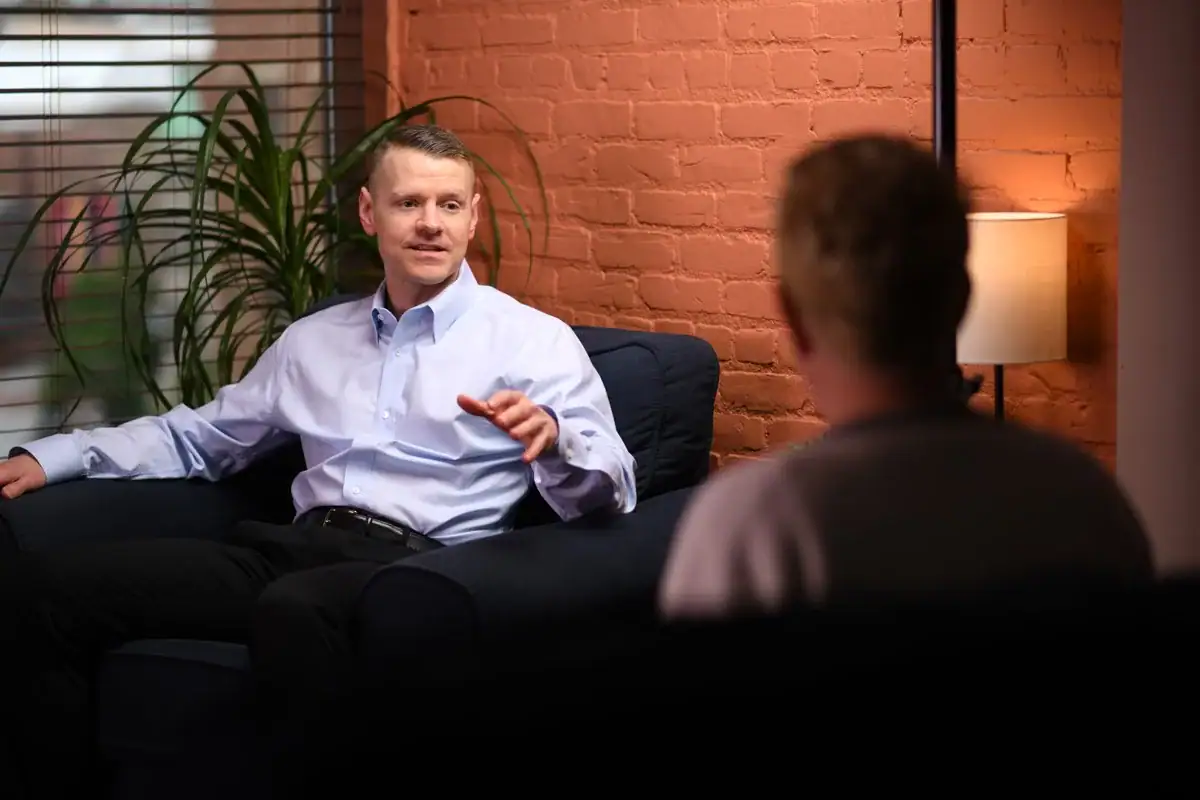
Most people notice changes within 6-8 sessions, but the full course of CBT for anxiety typically runs 12-20 sessions depending on severity. That’s not a hard rule—some people need more time, others need less. What matters is that you’re seeing measurable progress, not just talking about the same issues week after week.
Research shows that CBT produces moderate to large effects compared to control conditions, and those gains hold up at 6-12 month follow-ups. That means the skills you learn stick. You’re not dependent on therapy forever. The goal is to give you tools that work long after treatment ends.
If you’re dealing with OCD specifically, treatment might take longer because exposure work is gradual. But even then, most people complete a full course of ERP within 4-6 months. Our intensive four-day option can accelerate that timeline if you need faster results.
CBT is structured and goal-focused. You’re not spending months exploring your childhood or processing feelings without a clear direction. You’re identifying specific thought patterns and behaviors that maintain anxiety, then actively working to change them.
Regular talk therapy can be helpful for general support or insight, but it doesn’t have the same evidence base for anxiety and OCD. Our CBT therapy in College Station is built on decades of research showing that changing how you think and behave directly reduces symptoms. It’s not about understanding why you’re anxious—it’s about learning how to respond differently when anxiety shows up.
Sessions include homework, exposure exercises, and cognitive restructuring techniques. You’re practicing new skills between appointments, which is why progress happens faster than traditional therapy. Most people prefer this approach because it’s concrete. You can measure improvement week to week.
Yes, but the approach differs slightly. For generalized anxiety, CBT focuses on cognitive restructuring—challenging the catastrophic thinking that makes everything feel threatening. For OCD, the emphasis shifts to exposure and response prevention (ERP), which means facing intrusive thoughts without performing compulsions.
Both conditions respond well to CBT. Research shows 65-80% success rates for OCD when ERP is done correctly, and similar outcomes for anxiety disorders. The key is working with someone who understands the nuances. OCD requires a therapist trained specifically in ERP, not just general CBT techniques.
If you’re dealing with both anxiety and OCD—which is common—treatment addresses both. The cognitive work helps with anxious thinking, while the exposure work targets compulsive behaviors. You’re not choosing one or the other. You’re getting a comprehensive approach that covers all the bases.
Yes. Multiple studies confirm that telehealth CBT produces the same outcomes as in-person treatment for anxiety and OCD. The therapeutic relationship, the techniques, and the homework assignments all translate effectively to a virtual format.
For people in College Station, TX who have limited access to specialized OCD treatment, virtual care is often the better option. You’re not settling for a local generalist when you can work with a nationally recognized expert from home. The convenience also means fewer missed sessions, which improves consistency and outcomes.
Some people prefer in-person sessions for the structure and separation from home. That’s fine—we offer both. But if logistics, distance, or scheduling make virtual care easier, you’re not sacrificing quality. The research backs that up.
If you tried general talk therapy or a therapist who wasn’t trained in exposure-based techniques, that’s not the same as trying CBT. Most people who say therapy didn’t work were never given the specific tools that actually reduce anxiety and OCD symptoms.
Our CBT for OCD in College Station is different because it’s protocol-driven. There’s a clear structure, measurable goals, and homework that reinforces what you learn in session. You’re not just talking about your anxiety—you’re actively changing how you respond to it.
The average time between OCD diagnosis and effective treatment is 17.5 years. That’s not because treatment doesn’t exist—it’s because most people don’t find a therapist trained in ERP. If you’ve been stuck in that gap, working with our specialists changes everything. You’re not starting from scratch. You’re finally getting the right approach.
If you’re dealing with anxiety, OCD, panic, phobias, or compulsive behaviors, CBT has the strongest evidence base of any therapy approach. It’s not experimental. It’s the gold standard. That doesn’t mean it’s easy—exposure work is uncomfortable—but it works.
CBT isn’t a good fit if you’re looking for passive support or someone to just listen without challenging you. This is active treatment. You’ll have homework. You’ll face situations that trigger anxiety. You’ll be asked to sit with discomfort instead of avoiding it. But that’s also why it produces lasting change instead of temporary relief.
The best way to know if it’s right for you is to try an initial session. We’ll assess your symptoms, explain how treatment would work, and give you a realistic picture of what to expect. No pressure. No hard sell. Just honest information so you can make an informed decision.
Other Services we provide in College Station