


You stop planning your entire day around what might trigger your anxiety. The intrusive thoughts that used to derail your morning don’t control your schedule anymore. You can actually be present with your family instead of mentally rehearsing worst-case scenarios.
That’s what effective CBT for anxiety in McAllen, TX looks like in practice. Not “managing” symptoms forever, but genuinely reducing them so you can focus on what matters. The research backs this up—CBT demonstrates response and remission rates that mean for every four to five people who complete treatment, one additional person achieves full remission compared to those who don’t receive this type of care.
The difference shows up in daily life first. You notice you’re not checking your phone compulsively. You’re sleeping better because your mind isn’t racing at 2 AM. You accept invitations instead of making excuses. These aren’t small wins—they’re the building blocks of getting your life back.
We bring nationally recognized expertise to McAllen, TX through both virtual and in-person sessions. Our clinicians have shaped international OCD treatment guidelines and authored foundational texts in the field—but more importantly, many have lived through these conditions themselves.
That combination matters when you’re dealing with thoughts you’re afraid to say out loud. You need someone who’s seen it all clinically and understands it personally. McAllen and the broader Rio Grande Valley have established mental health resources, but specialized anxiety and OCD treatment requires specific training that most general practitioners simply don’t have.
We serve children, adolescents, and adults with culturally sensitive approaches in both English and Spanish. You’re not getting a therapist who treats “everything”—you’re working with specialists who focus exclusively on anxiety disorders and OCD using methods with documented success rates between 65-80%.

Your first session focuses on assessment, not treatment. We need to understand exactly what you’re dealing with—the specific triggers, the patterns, the failed attempts you’ve already made. This isn’t a questionnaire you fill out alone; it’s a detailed conversation that typically reveals why previous therapy didn’t work.
From there, we build a treatment plan using cognitive restructuring and behavioral activation techniques specific to your situation. Cognitive restructuring means identifying the thought patterns that fuel your anxiety and testing whether they’re actually accurate. Behavioral activation means gradually doing the things anxiety has convinced you to avoid.
You control the pace entirely. No forced exposures, no pressure to move faster than you’re ready. Some clients prefer our intensive four-day treatment format; others need weekly sessions over several months. Both approaches use the same evidence-based methods—the difference is timing and intensity.
Sessions happen either virtually from your home or in person, depending on what works for your schedule and comfort level. You’ll have homework between sessions because CBT for OCD in McAllen, TX requires practice outside the therapy room. That’s not busywork—it’s how the changes become permanent instead of temporary relief that fades when therapy ends.

Ready to get started?
Every treatment plan includes a comprehensive initial assessment that goes beyond surface symptoms. We’re looking at how long you’ve been dealing with this, what’s worked even slightly, and what’s made things worse. That assessment informs everything that follows.
You’ll learn specific CBT techniques for anxiety that apply to your exact situation—not generic coping skills, but targeted interventions. For OCD, that often means exposure and response prevention work. For generalized anxiety, it might focus more on cognitive restructuring and worry postponement strategies. For panic disorder, we’re addressing the fear of physical sensations and safety behaviors.
Treatment in McAllen, TX also means understanding the local context. The Rio Grande Valley has specific cultural considerations around mental health, family involvement, and stigma that affect how treatment works. We address those directly rather than pretending they don’t exist. Family education and support are included when helpful, because lasting change often requires the people around you to understand what you’re working on.
You’ll also get transparency about the timeline and what success actually looks like. Most people see meaningful improvement within 12-20 sessions, though OCD sometimes requires more intensive work upfront. The goal isn’t perfect—it’s functional. It’s getting back to work, to relationships, to the activities anxiety has stolen from you.
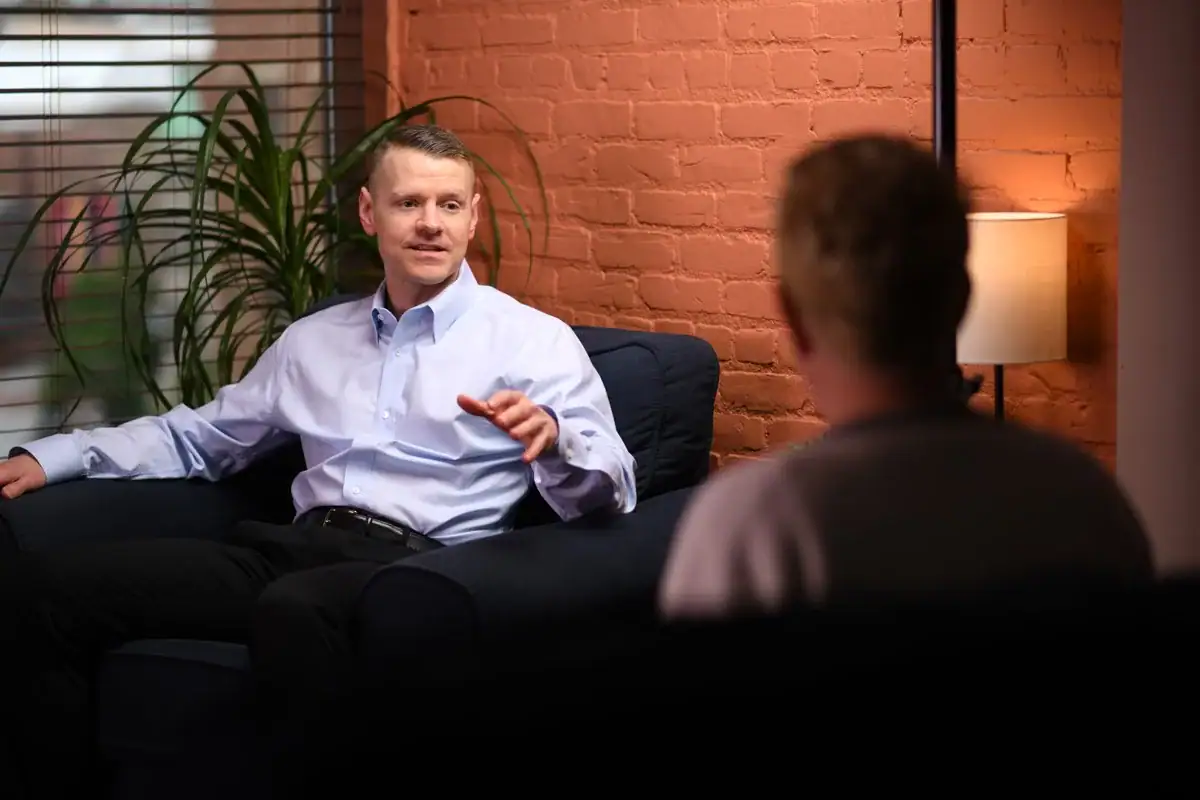
Regular talk therapy often focuses on exploring feelings and past experiences. That can be valuable, but it doesn’t directly change the patterns maintaining your anxiety right now.
CBT therapy in McAllen, TX is structured and present-focused. Each session has specific goals. You’re learning concrete skills and practicing them between appointments. We’re identifying the exact thoughts that trigger your anxiety, testing whether those thoughts are accurate, and gradually changing your behavioral responses.
The difference shows up in research outcomes. Studies show CBT achieves effect sizes around 0.75-0.95 in real-world settings, with only 1.9% of patients reporting symptom worsening. That’s significantly better than supportive therapy or unstructured counseling. You’re not just feeling heard—you’re actively building new neural pathways that reduce anxiety over time.
Exposure work is often part of effective anxiety treatment, but it’s never forced and always gradual. You’re in control of the pace.
Here’s what that actually means: if you have contamination fears, we’re not making you touch a public toilet in week two. We’re building a hierarchy together—starting with things that cause mild discomfort and working up slowly as you build confidence. You decide when you’re ready for the next step.
The goal of behavioral activation and exposure isn’t to torture you. It’s to prove to your brain that the feared outcome either doesn’t happen or isn’t as catastrophic as anxiety predicts. That only works if you’re genuinely willing to try. Forced exposure just creates more trauma. Collaborative, paced exposure creates lasting change. Most clients are surprised by how manageable it feels when done correctly.
Most people see meaningful improvement within 12-20 sessions for anxiety disorders. OCD sometimes requires more intensive work, particularly if you’ve been dealing with it for years without proper treatment.
The research shows CBT effects remain stable or decrease only slightly at follow-up, meaning the gains you make tend to last. That’s different from medication, which often requires ongoing use to maintain benefits. You’re learning skills that become automatic over time.
Some clients choose our intensive four-day treatment option, which condenses the work into a shorter timeframe. Others prefer weekly sessions that allow more time to practice between appointments. Both approaches work—it depends on your schedule, symptom severity, and how quickly you want to see results. We’re transparent about expected timelines from your first consultation so you know what you’re committing to.
That’s more common than you’d think, and it usually means one of three things: the therapist wasn’t properly trained in CBT for anxiety and OCD, the treatment wasn’t intensive enough, or it wasn’t actually CBT despite being labeled that way.
Many therapists list CBT as a specialty without specific training in exposure-based work or cognitive restructuring techniques. They might use some CBT concepts but don’t implement the full protocol that research shows is effective. That’s like saying you tried physical therapy when you only did two of the twelve prescribed exercises—it’s not really a fair test of whether the treatment works.
Specialized CBT for OCD in McAllen, TX means working with clinicians trained specifically in these protocols. Our team includes people who’ve written the treatment guidelines and trained other therapists. If previous CBT didn’t work, we can usually identify why and adjust the approach. Sometimes it’s about intensity, sometimes it’s about targeting the right maintaining factors, sometimes it’s about addressing avoidance patterns that weren’t caught the first time.
Both. You can choose secure virtual sessions from home or in-person appointments depending on what works better for your situation.
Virtual CBT therapy in McAllen, TX is just as effective as in-person treatment for most anxiety disorders. The research confirms this—outcomes are essentially identical when the therapist is properly trained. Some people prefer virtual because it eliminates travel time and makes it easier to practice exposures in their actual environment. Others want face-to-face interaction, especially early in treatment.
For OCD with contamination fears or agoraphobia, virtual sessions sometimes work better initially because leaving home feels impossible. We can start there and transition to in-person later if needed. The intensive four-day format is typically done in person, but we can discuss modifications based on your specific needs. Flexibility matters because barriers like distance, time constraints, and difficulty leaving home are exactly what prevent people from getting effective treatment in the first place.
If you’re asking this question, your anxiety is probably affecting your life more than “normal stress” would. Normal stress doesn’t make you avoid entire categories of activities or spend hours each day managing intrusive thoughts.
Here’s a practical test: Is your anxiety stopping you from doing things you want or need to do? Are you spending significant time each day on worry, checking behaviors, or mental rituals? Have other people noticed and commented on it? If yes to any of those, you’re likely dealing with an anxiety disorder that would respond to evidence-based anxiety treatment in McAllen, TX.
The average time between when OCD symptoms start and when people find effective treatment is 17.5 years. Most of that delay happens because people minimize what they’re experiencing or hope it’ll resolve on its own. It rarely does without proper intervention. The initial assessment will clarify exactly what you’re dealing with and whether CBT is the right approach. If it’s not, we’ll tell you that directly and point you toward what would actually help.
Other Services we provide in Mcallen