


You stop spending hours trapped in loops of “what if” thinking. The intrusive thoughts still show up sometimes, but they don’t control your day anymore.
You’re not white-knuckling your way through normal activities. Grocery stores, social events, driving—they become things you do, not things you avoid or endure with dread.
CBT for anxiety in Odessa, TX teaches you how to recognize the patterns your brain runs on autopilot. Cognitive restructuring helps you challenge the thoughts that fuel panic. Behavioral activation gets you moving again when anxiety has kept you stuck. You learn techniques that work in real situations, not just in theory.
Most people notice shifts within the first few weeks. Not perfection—progress. The kind where you realize you went a whole afternoon without checking, ruminating, or bracing for disaster.
We bring specialized CBT for OCD and anxiety disorders to Odessa, TX through both telehealth and in-person sessions. Our team includes published researchers and clinicians who’ve shaped national treatment guidelines—many with lived experience of the conditions we treat.
That combination matters in West Texas, where access to specialized mental health care has been limited. Odessa ranks as one of the highest-paying cities for mental health professionals in Texas because the demand is real and the need is urgent. You shouldn’t have to drive hours or wait months to see someone who actually understands OCD and anxiety disorders.
We work with children, adolescents, and adults. Every treatment plan is built around exposure-based therapies and cognitive behavioral techniques that have decades of research behind them. No guessing. No generic talk therapy that skirts around the real problem.

You start with an assessment. We talk through what’s been happening, what you’ve tried before, and what’s getting in the way of your life right now. This isn’t a surface-level conversation—we’re identifying specific thoughts, behaviors, and triggers that keep the cycle going.
From there, we build a treatment plan using CBT techniques for anxiety that fit your situation. That might include cognitive restructuring to challenge distorted thinking patterns, exposure work to reduce avoidance, or behavioral activation to break out of withdrawal and isolation. You’ll know what we’re doing and why.
Sessions are structured but flexible. You’re not lying on a couch talking about your childhood for months. You’re learning skills, practicing them between sessions, and adjusting based on what’s working. Most people see measurable improvement within 12 to 16 weeks, though some need more or less time depending on severity.
We also offer intensive four-day treatment programs for people who need faster intervention or who’ve been stuck despite trying traditional weekly therapy. It’s the same evidence-based approach, just condensed and immersive.

Ready to get started?
You get access to clinicians trained specifically in anxiety and OCD—not generalists trying to treat everything. That specialization matters when you’re dealing with intrusive thoughts, compulsions, panic attacks, or phobias that haven’t responded to other treatments.
Treatment includes exposure and response prevention (ERP), the gold standard for OCD, along with cognitive restructuring and other CBT methods depending on your diagnosis. Two out of three people who complete ERP see significant improvement, with an average symptom reduction of over 40%. Those aren’t vague claims—they’re outcomes backed by research.
In Odessa and across West Texas, mental health challenges have intensified over the past few years. Economic uncertainty, the lasting impact of the 2019 mass shooting, and the isolation of the pandemic have all taken a toll. You’re not imagining that things feel harder—they are. And you’re not alone in needing help that actually addresses what you’re going through.
We’re transparent about fees, process, and what to expect. You’ll have access to secure telehealth or in-person appointments depending on what works for your schedule and comfort level. And if you’re dealing with comorbid conditions like depression or other anxiety disorders—which 90% of people with OCD experience—we address that too.
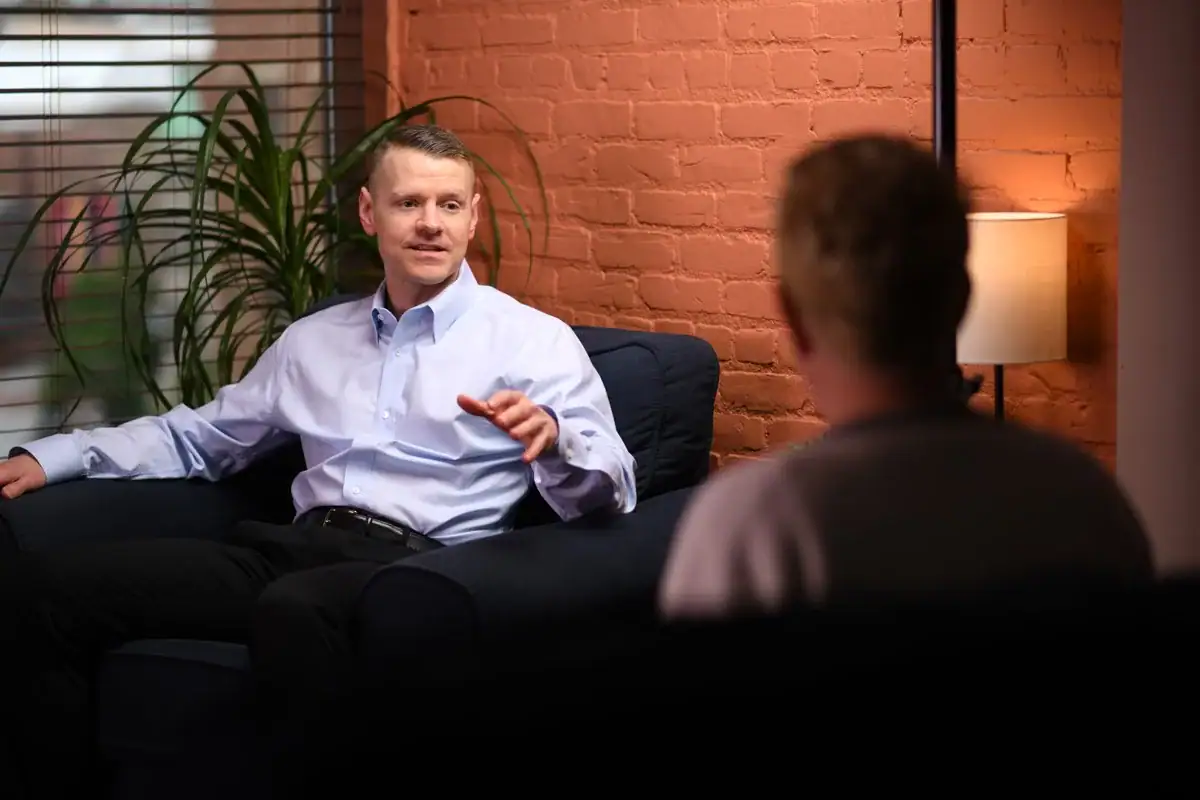
CBT is structured and skills-based. You’re not just talking about how you feel—you’re identifying specific thought patterns and behaviors that keep anxiety or OCD going, then actively working to change them.
In regular talk therapy, the focus is often on exploring feelings, past experiences, or gaining insight. That can be helpful for some things, but it doesn’t usually teach you how to stop a panic attack in the moment or resist a compulsion. CBT gives you tools you can use right away.
Sessions have a clear agenda. You might work on challenging a specific fear, practicing a behavioral experiment, or learning how to sit with discomfort without doing the compulsive behavior that temporarily relieves it. It’s collaborative, and you’ll know what the goal is each week.
Most people start noticing changes within four to six weeks, but meaningful improvement typically takes 12 to 16 sessions. That’s not a hard rule—some people need more time, especially if they’re dealing with severe OCD or multiple comorbid conditions.
The timeline depends on how long you’ve been struggling, how severe the symptoms are, and how consistently you’re able to practice between sessions. CBT isn’t passive. The work you do outside of appointments—facing fears, practicing new responses, challenging old thought patterns—is where the real change happens.
If you’ve been dealing with anxiety or OCD for years, it’s not going to disappear in a month. But you should see enough progress early on to know the approach is working. If you’re not, we adjust.
That’s common, and it doesn’t mean therapy doesn’t work—it usually means you didn’t get the right kind. A lot of people with OCD or anxiety disorders spend years in general therapy that never addresses the actual mechanisms keeping them stuck.
CBT for OCD and anxiety is different. It’s specific, evidence-based, and focused on exposure and behavior change, not just insight or coping. If your previous therapist didn’t use exposure work or didn’t specialize in anxiety disorders, you likely weren’t getting the treatment most likely to help.
There’s also the issue of misdiagnosis. OCD is misdiagnosed about half the time, and the average person waits 14 to 17 years between when symptoms start and when they get effective treatment. If what you tried before wasn’t targeted to what you actually have, it makes sense it didn’t work.
Yes. CBT, specifically exposure and response prevention, is the most effective treatment for OCD. It works by helping you stop responding to intrusive thoughts with compulsions, which is what keeps the cycle going.
Intrusive thoughts are uncomfortable, but they’re not dangerous. The problem is that compulsions—whether they’re physical rituals, mental checking, reassurance-seeking, or avoidance—give temporary relief but make the thoughts come back stronger. ERP teaches you to tolerate the discomfort without doing the compulsion.
It’s not about making the thoughts go away. It’s about changing your relationship with them so they don’t run your life. Over time, the thoughts lose their power because your brain learns they’re not the threat it thought they were. That process is hard, but it works.
Both options work. Research shows that internet-based CBT is just as effective as face-to-face therapy for anxiety and OCD, so it comes down to what fits your life and comfort level.
Telehealth makes sense if you’re in a rural part of West Texas, if your schedule makes it hard to get to an office, or if leaving the house is part of what you’re struggling with right now. You’ll still get the same structured treatment, the same exposure work, and the same level of expertise.
In-person sessions can be helpful if your treatment involves exposures that are easier to do in real time with a clinician present, or if you just prefer that format. We offer both, and some people switch between them depending on what they’re working on.
The first session is an assessment. We’ll talk through what’s been going on, how long it’s been happening, what you’ve tried, and what’s interfering with your life right now. You’ll also talk about any previous diagnoses, medications, and what you’re hoping to get out of treatment.
This isn’t just a checklist. We’re trying to understand the specific ways anxiety or OCD shows up for you—what thoughts trigger it, what behaviors keep it going, and what you’ve been avoiding. That helps us build a treatment plan that’s actually relevant.
You’ll leave with a clearer picture of what CBT involves, what the timeline might look like, and what the next steps are. Some people start exposure work or cognitive restructuring as early as the second session. Others need a few weeks to build skills first. It depends on where you’re starting from.
Other Services we provide in Odessa