


You’re not looking for someone to just listen and nod. You need a way out of the cycle—the intrusive thoughts that won’t stop, the rituals that eat up your day, the constant dread that something terrible is about to happen.
CBT therapy in Waco, TX gives you practical tools to interrupt those patterns. Not through willpower or positive thinking, but through structured exposure work and cognitive restructuring that retrains how your brain responds to anxiety triggers. Most people start noticing shifts within the first few weeks—not because the thoughts disappear, but because you learn how to stop giving them power.
The goal isn’t to eliminate anxiety completely. It’s to help you function without being controlled by it. You’ll learn to recognize when your brain is lying to you, how to sit with discomfort without reacting, and how to reclaim the parts of your life that OCD or anxiety has taken over.
We bring specialized CBT for OCD and anxiety disorders to Waco, TX through both virtual sessions and in-person care. Our team includes nationally recognized researchers, published clinicians, and therapists with lived experience—people who’ve personally dealt with OCD and understand what it’s like when your own mind feels like the enemy.
We’re not generalists trying to treat everything. We focus exclusively on anxiety and OCD using exposure-based therapies, particularly Exposure and Response Prevention (ERP)—the gold-standard treatment with success rates between 65-80%. That means you’re working with clinicians who have mastered these approaches, not someone still figuring them out.
Waco faces higher-than-average rates of depression and anxiety, and access to specialized OCD treatment has historically been limited. We’re here to change that—offering the same level of expertise you’d find in major metro areas, without the wait times or the need to travel hours for real help.

You’ll start with an initial consultation where we assess what you’re dealing with and whether CBT for anxiety or OCD is the right fit. No pressure, no commitment—just an honest conversation about your symptoms, your history, and what treatment would involve.
If you move forward, your therapist will work with you to identify the specific thoughts, triggers, and compulsions that are running the show. From there, you’ll build a personalized treatment plan using cognitive restructuring to challenge distorted thinking patterns and behavioral activation to break avoidance cycles. For OCD, that means gradual exposure work—confronting the things that trigger anxiety in a controlled way, without performing the compulsions your brain is screaming at you to do.
Sessions can happen virtually or in person, depending on what works for your schedule and comfort level. Most people do weekly sessions, but we also offer intensive four-day treatment options if you need faster progress. You’re not doing this alone, and you’re not being thrown into the deep end. Every step is collaborative, transparent, and designed around what you can handle.
The work is hard. But it’s the kind of hard that actually leads somewhere—not the exhausting, endless hard of living with untreated OCD or anxiety.

Ready to get started?
CBT techniques for anxiety in Waco, TX go beyond talk therapy. You’re learning how to rewire automatic responses through exposure and response prevention, cognitive restructuring, and behavioral experiments that test whether your fears are actually accurate.
For residents in Waco dealing with OCD, access to trained ERP therapists has been limited. Many local providers offer general counseling, but OCD requires specialized training—our clinicians hold credentials from the International OCD Foundation’s Behavior Therapy Training Institute, meaning they’ve completed rigorous training in the exact methods proven to work for OCD and anxiety disorders.
Treatment also includes education about how anxiety and OCD function in the brain, why compulsions and avoidance make things worse over time, and how to recognize when you’re being pulled into a ritual. You’ll get homework between sessions—exposure exercises, thought records, behavioral experiments—because real change happens in your daily life, not just during the therapy hour.
We’re transparent about costs, insurance limitations, and what to expect at every stage. No surprises, no runaround. Just clear communication about what this process involves and what kind of results you can realistically expect based on research, not marketing promises.
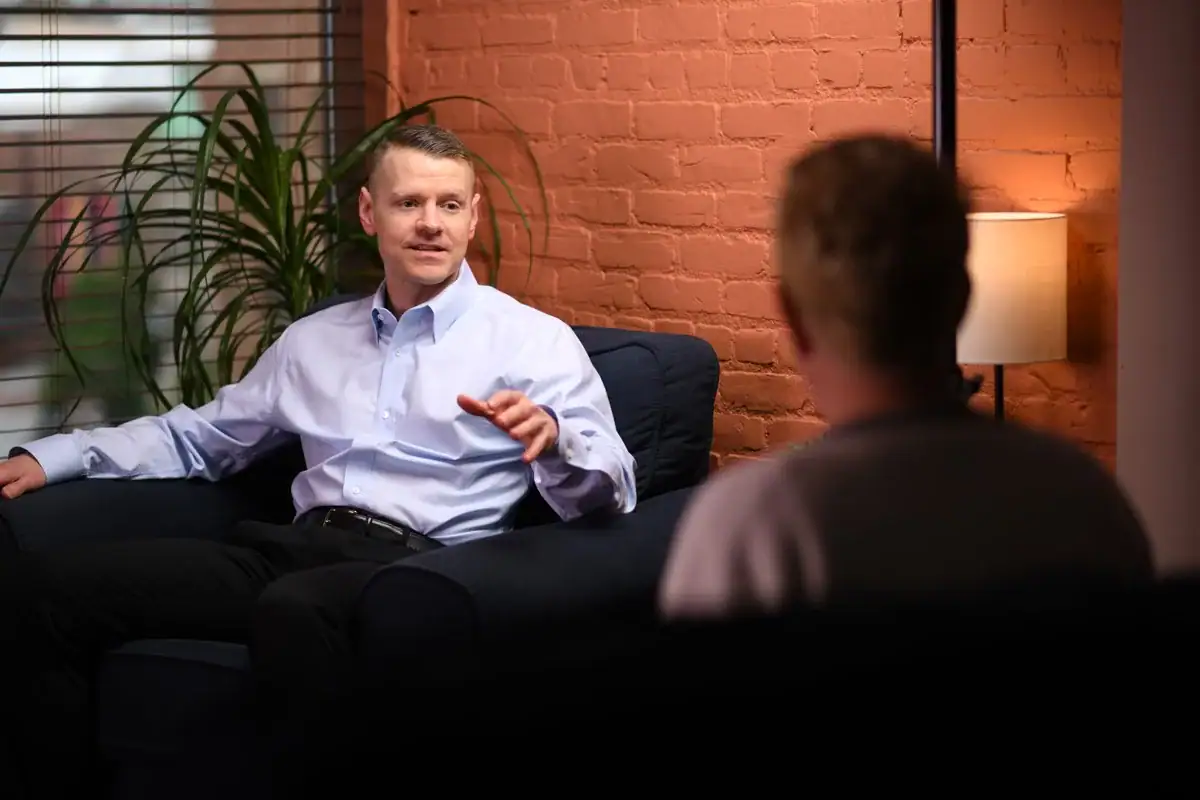
Regular therapy often focuses on talking through feelings, exploring past experiences, or building coping skills. That can be helpful for some things, but it doesn’t work for OCD. OCD isn’t a problem you can think your way out of—it’s a disorder that feeds on reassurance and avoidance.
CBT for OCD in Waco, TX uses Exposure and Response Prevention, which means deliberately triggering the anxiety (in a controlled way) and then resisting the compulsion. That sounds terrifying, and honestly, it can be uncomfortable. But it’s the only approach with decades of research showing it actually works. You’re teaching your brain that the feared outcome won’t happen, or that you can handle it if it does.
The difference is that you’re not just managing symptoms—you’re breaking the cycle that keeps OCD alive. Most people see significant improvement within 12-20 sessions, with about 60% achieving remission. Compare that to years of traditional talk therapy with minimal change, and the choice becomes pretty clear.
No. Exposure work is gradual and completely collaborative. You’re not being forced into anything, and your therapist won’t push you into situations you’re not ready for.
The first few sessions focus on understanding your specific triggers, building a hierarchy of fears from least to most distressing, and learning the theory behind why exposure works. You’ll start with lower-level exposures—things that cause mild anxiety—and build up slowly as you gain confidence. The goal is to challenge your anxiety, not traumatize you.
Some people are ready to dive in quickly. Others need more time to trust the process. Both are fine. What matters is that you’re moving forward at a pace that’s uncomfortable enough to create change, but not so overwhelming that you shut down. Your therapist will adjust based on your progress and feedback, and you’ll always know what’s coming next.
Most people start noticing changes within the first few weeks of CBT therapy in Waco, TX, but meaningful improvement usually takes 12-20 sessions. That’s not a hard rule—some people progress faster, others need more time depending on symptom severity and how long the anxiety or OCD has been untreated.
Research shows that about 75% of people with OCD are significantly helped by CBT, with remission rates around 60% post-treatment. Those results hold up long-term too—studies show that people maintain their gains an average of 15 months after treatment ends, with remission rates staying above 55%.
If you’re doing an intensive program (our four-day option), you’ll see faster initial progress because you’re doing multiple sessions per day in your natural environment. That accelerated format works well for people who need quicker results or who’ve been stuck in traditional weekly therapy without much movement. Either way, the goal is the same: give you the tools to manage anxiety and OCD on your own, not keep you in therapy forever.
Yes—especially if the therapy you tried before wasn’t specialized CBT for anxiety or OCD. A lot of people spend years in general counseling or supportive therapy without improvement because those approaches don’t target the mechanisms that keep OCD and anxiety disorders going.
If you’ve tried CBT before and it didn’t work, the issue might have been the therapist’s training level, the intensity of treatment, or whether true exposure work was actually happening. Many therapists say they do CBT but don’t have specialized training in ERP or exposure-based techniques. That’s like saying you do surgery because you know where the scalpel is.
Our clinicians have advanced training specifically in OCD and anxiety treatment. They’ve worked with people who’ve been through multiple failed attempts at therapy, and they know how to adjust the approach based on what didn’t work before. The research is clear: when CBT is done correctly by a trained specialist, it works. If it hasn’t worked for you yet, it’s worth questioning whether you actually received evidence-based treatment or just something called CBT.
Both options work. Research shows that teletherapy for CBT builds just as strong a therapeutic relationship as in-person sessions, and clinical outcomes are comparable. For people in Waco, TX dealing with anxiety or OCD, virtual sessions remove barriers like travel time, scheduling conflicts, and the anxiety of sitting in a waiting room.
That said, some exposure work is easier to do in person—particularly if your OCD involves specific locations, objects, or situations that your therapist needs to be present for. We offer both virtual and in-person options so you can choose what fits your life and your treatment needs.
The format matters less than the quality of the treatment itself. What matters is working with someone who knows how to do exposure-based CBT correctly, who can guide you through the discomfort, and who won’t let you off the hook when your brain is screaming at you to do a compulsion. Whether that happens over a screen or across a desk, the principles are the same.
Severe OCD or anxiety doesn’t automatically mean you need inpatient care. In fact, our intensive four-day treatment option is designed specifically for people with significant symptoms who need more than weekly sessions but don’t require hospitalization.
Intensive outpatient treatment lets you do multiple therapy sessions per day while staying in your own environment—which is actually more effective for OCD than being in a clinical setting. You’re practicing exposures in the places where your symptoms show up, with real-time coaching from a specialist who understands how to push you forward without pushing you over the edge.
If your symptoms are genuinely at a level where you’re unable to function, can’t keep yourself safe, or need medical stabilization, we’ll tell you that honestly and help you find the right level of care. But most people—even those with severe, longstanding OCD—can make significant progress in outpatient treatment when it’s done intensively and correctly. The question isn’t how bad your symptoms are. It’s whether you’re ready to do the work.
Other Services we provide in Waco